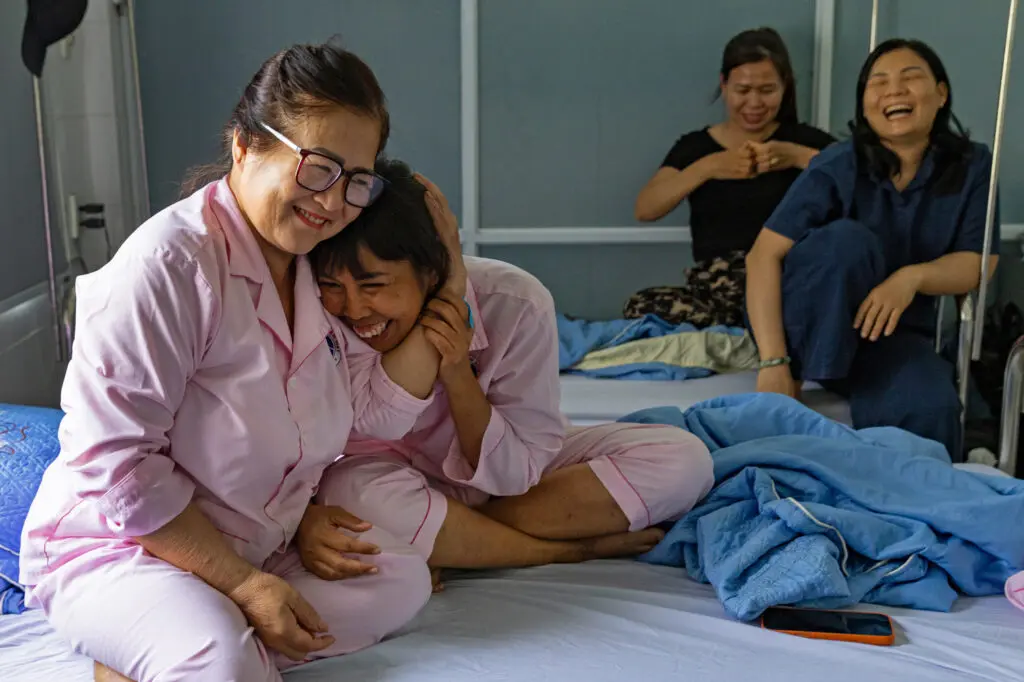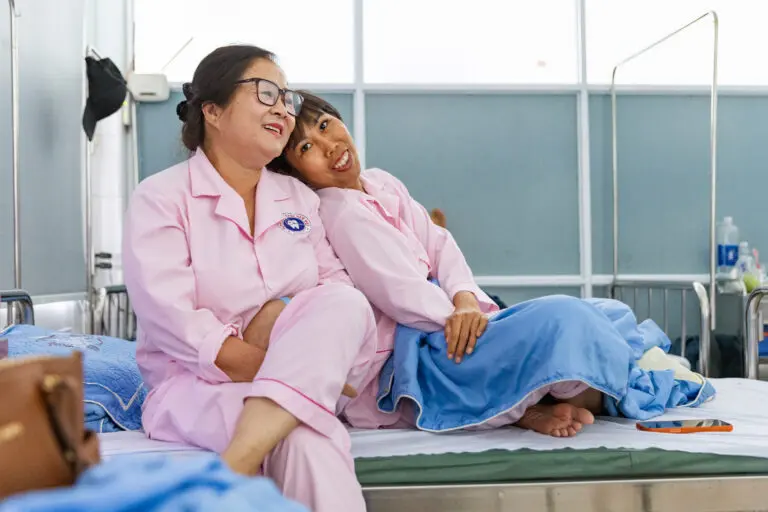
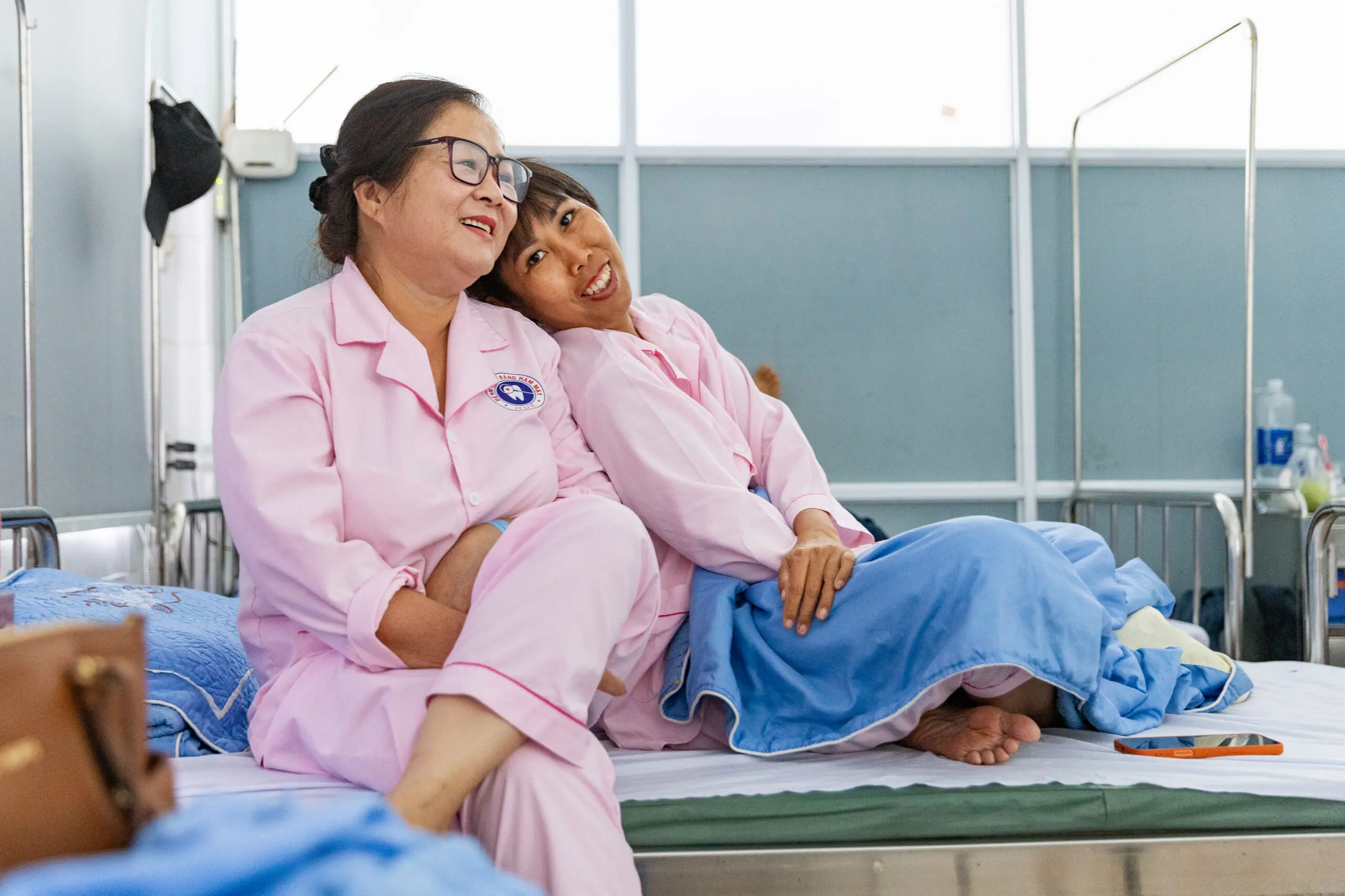
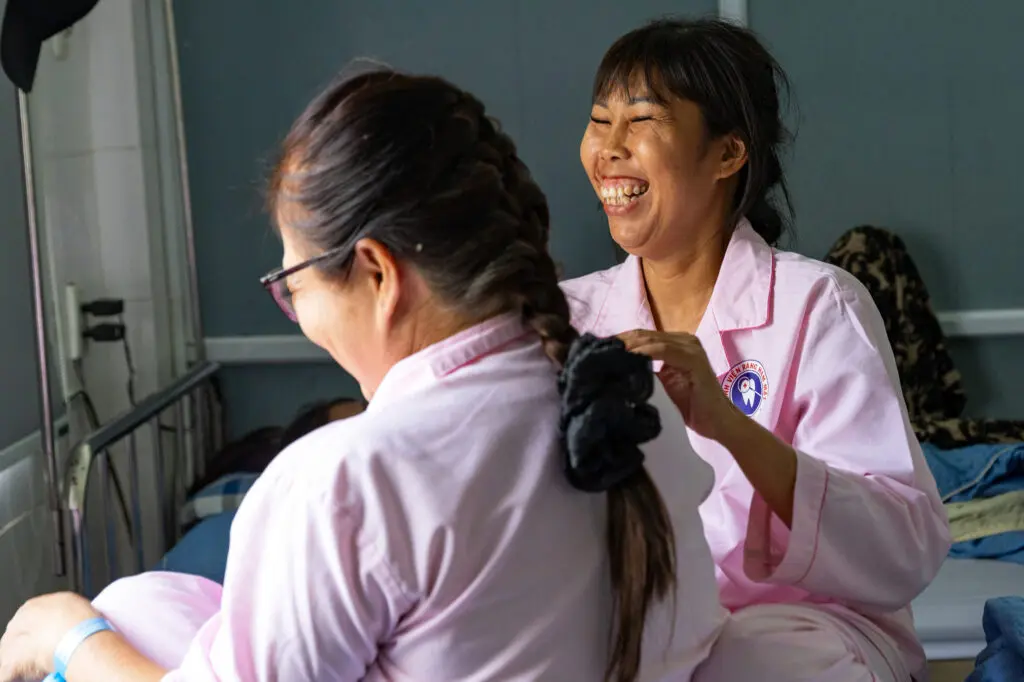
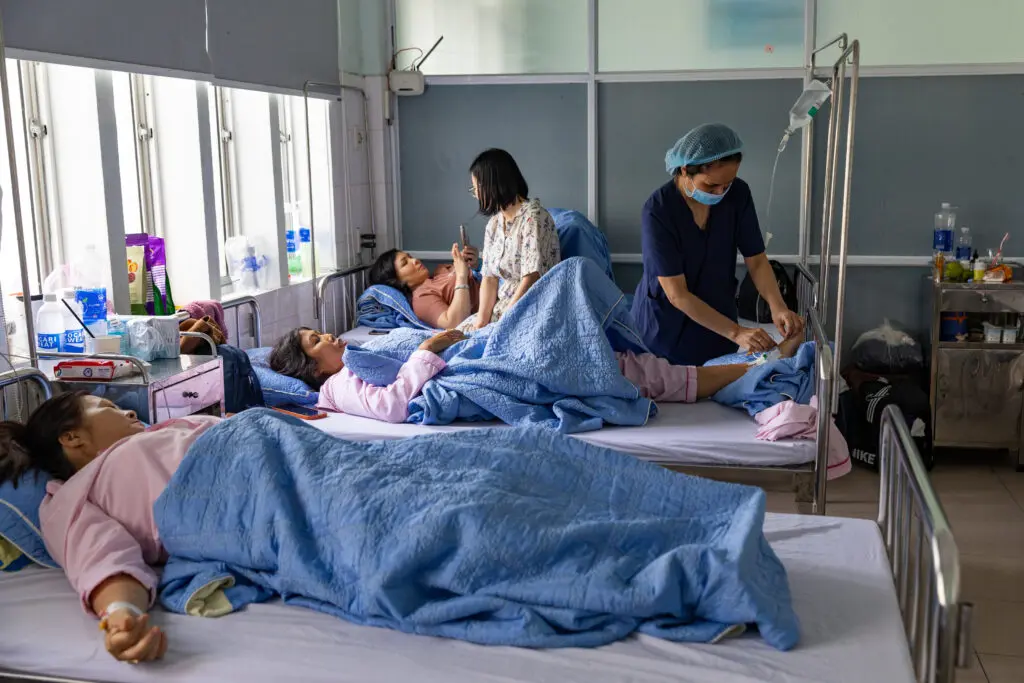
Nguyen Thi Nga, or Nga as we’ll call her, has a contagious smile. It is the first thing you notice about her, sitting with a group of women in Huế, Vietnam, who are all waiting for the same thing, reconstructive surgery after surviving breast cancer.
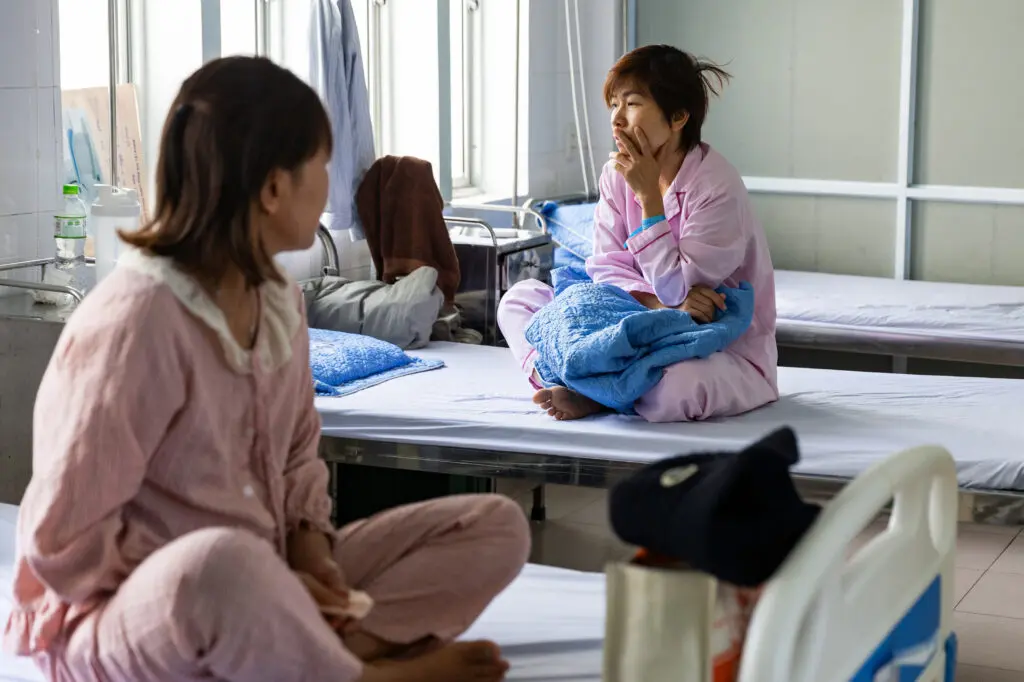
They have come from different parts of Vietnam, each carrying her own story of diagnosis, treatment, and recovery. Some met here a year ago. Others are new to the group. But they share an understanding of what the others have been through.
They came for free reconstructive surgery with ReSurge International. Along the way, they found each other.
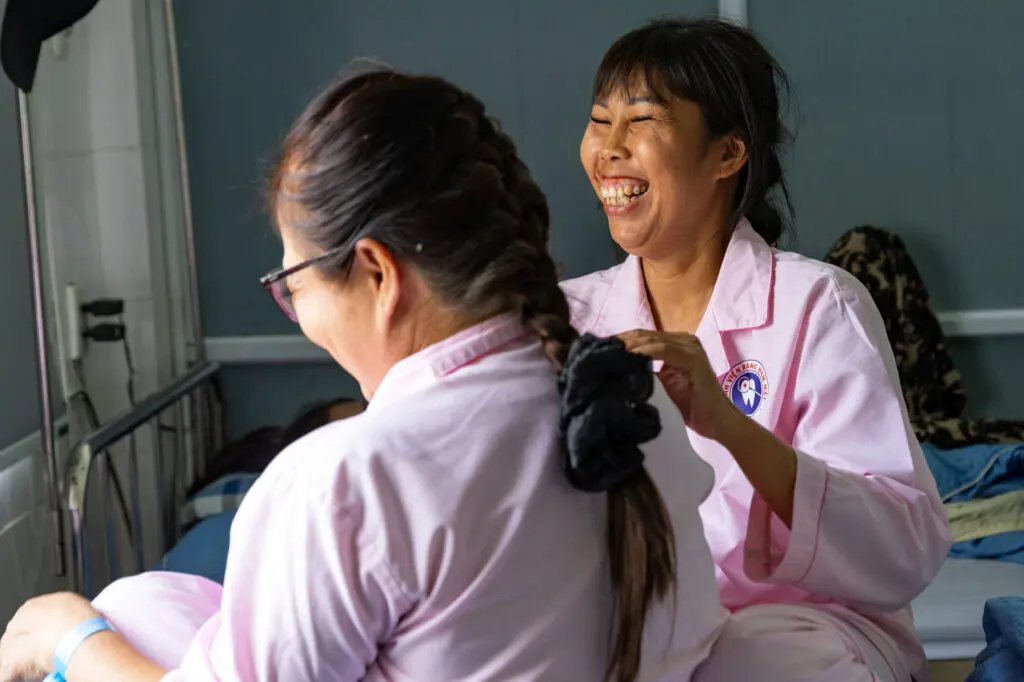
Different lives, shared experiences
Nga works in a government office in Hanoi and has children in school. In 2019, she was diagnosed with breast cancer. She underwent a mastectomy of her right breast, surgery to remove lymph nodes under her arm, and eight rounds of chemotherapy.
“When the disease was first detected, I was very bewildered and frightened,” she remembers. In the hospital, she met women going through the same thing, and that steadied her.
Cancer-free, she returned to work. But clothes sat unevenly, and she did not want to live with one side and not the other. For Nga, reconstruction is about confidence: the confidence to keep working, go out, and feel like herself again.
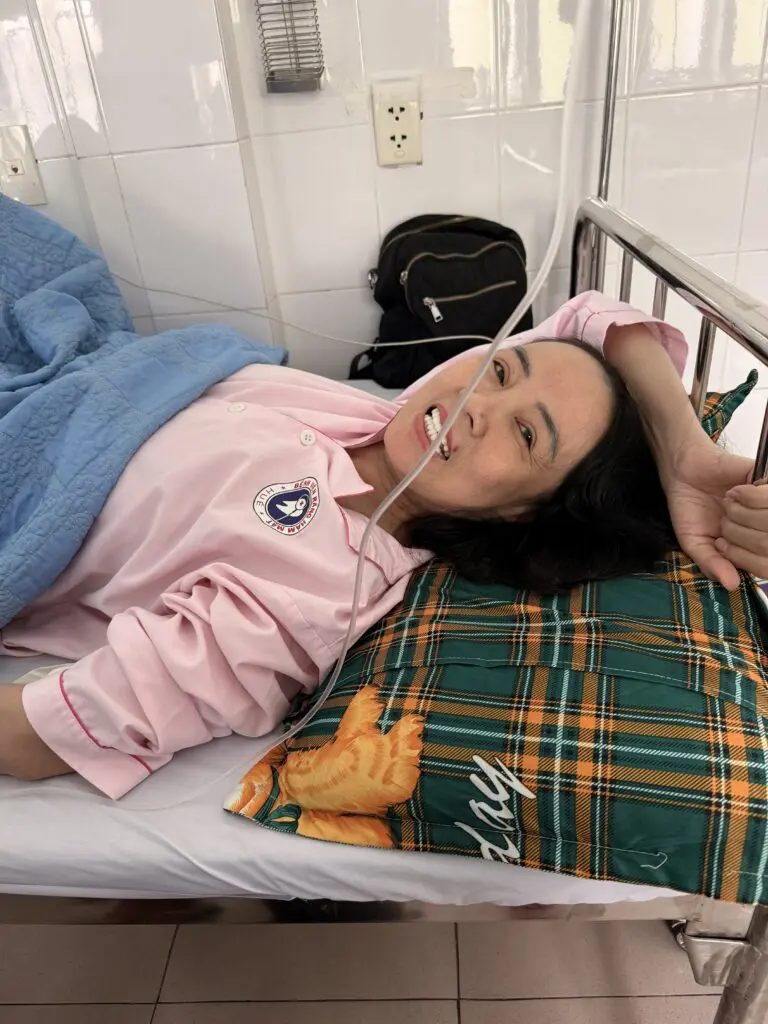
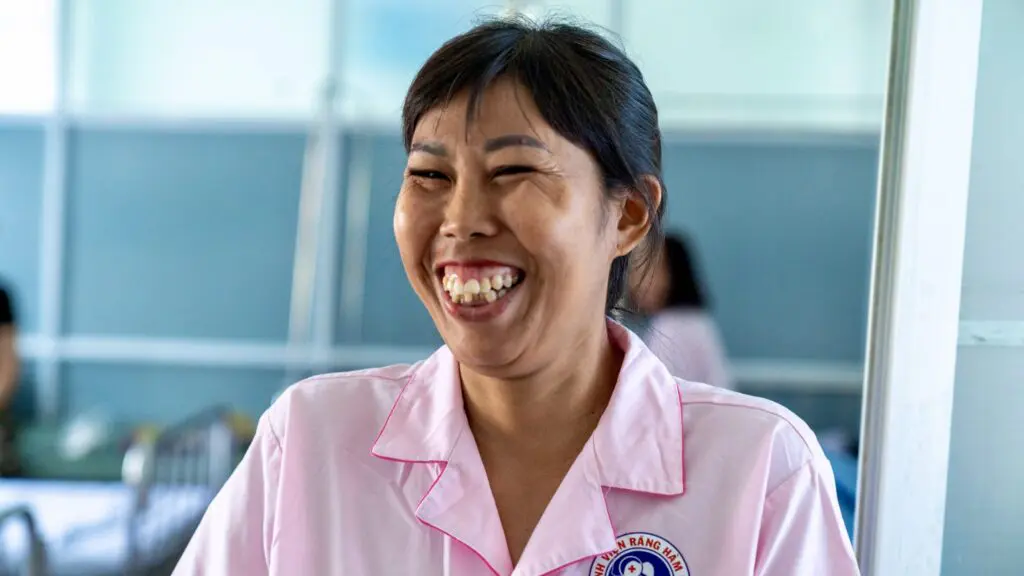
One of Nga’s new friends, Hoa, has a different story, but a similar determination.
Hoa runs a small café from her home in Saigon. Her daughter was born with clubfoot and underwent surgery that helped her learn to walk. Then came heart surgery. Later, Hoa learned her daughter was on the autism spectrum.
When her daughter had recovered, Hoa planned to have a second child. A routine exam found a lump in her breast. It was benign at first. Three months later, it was cancer.
About two years ago, she underwent a total mastectomy, followed by chemotherapy and radiation.
She let herself cry for one night.
“If something happens to me, my child will have no one to take care of her,” she says. “So I must conquer myself, conquer the illness.”
Both women eventually found their way to ReSurge’s surgical team in Huế through people they knew. Nga’s relative, also a breast cancer survivor, had been treated by local ReSurge surgical partner Dr. Trung Hau Lê Thua and introduced her. Hoa heard about the opportunity from a friend who works at the hospital.
Nga admits she hesitated at first. But talking with Dr. Trung Hau and ReSurge volunteer surgeon Dr. Dung Nguyen gave her trust. So did watching two other women come through their reconstructions successfully.
Last year, she had her first surgery. This year, she has returned to complete it. She describes herself as anxious, excited, and full of hope.
A second family
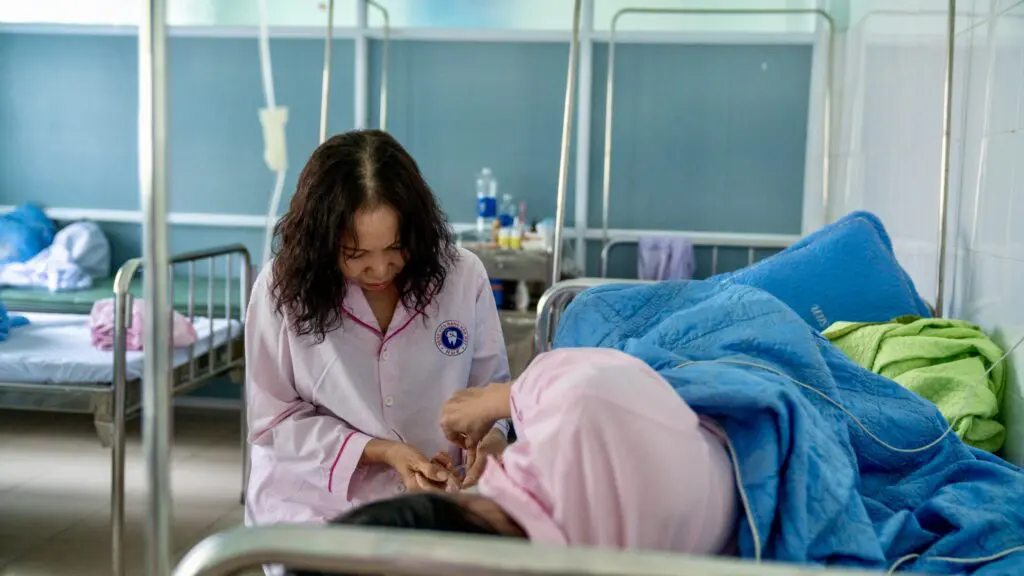
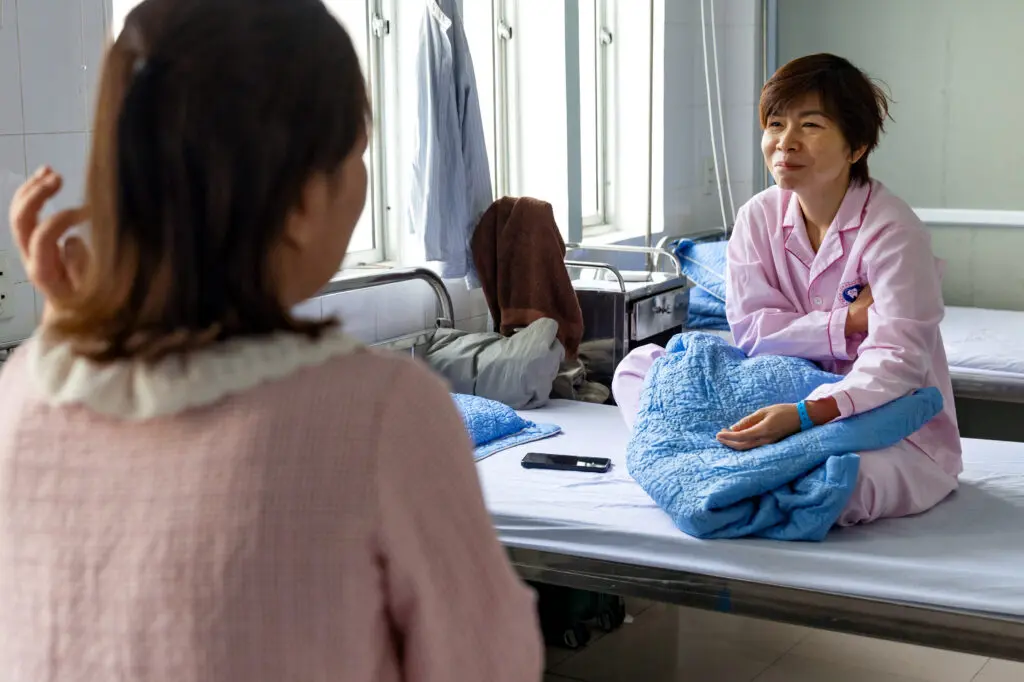
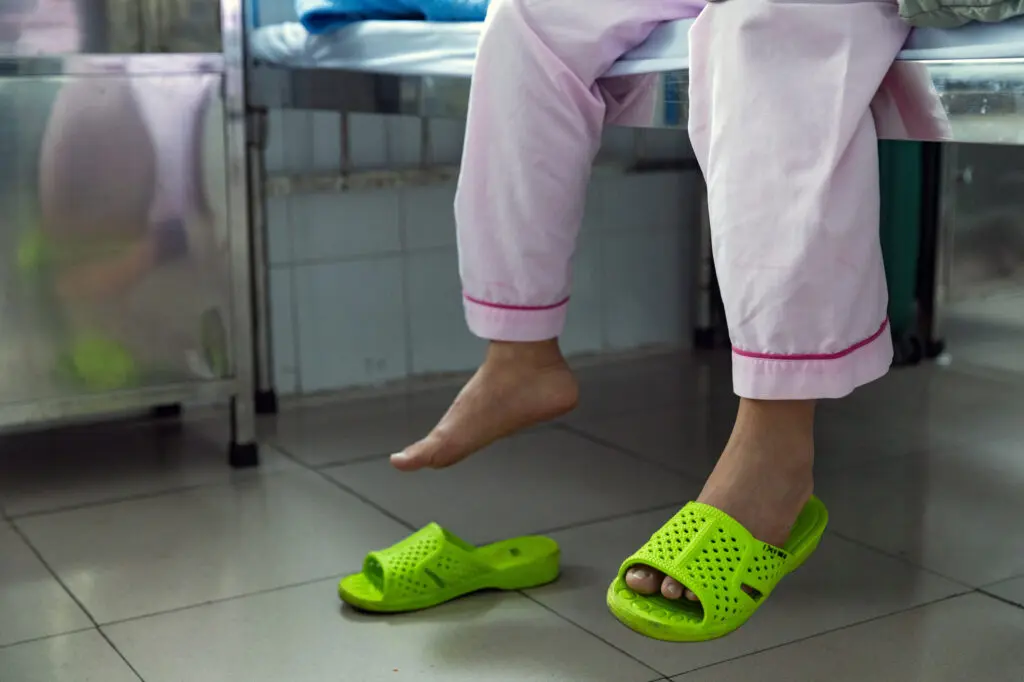
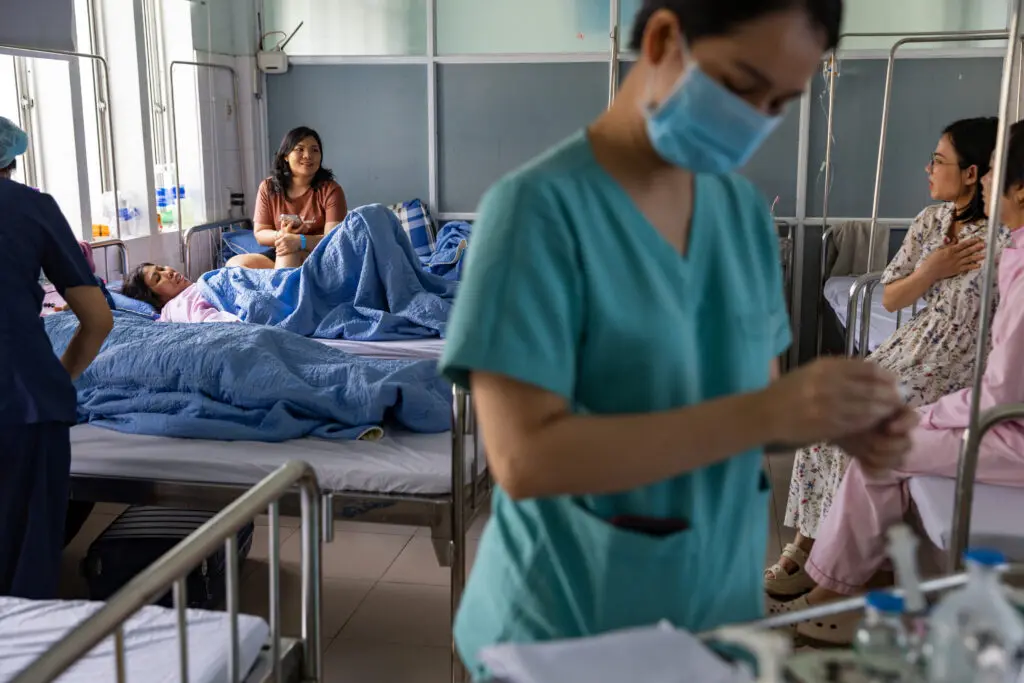
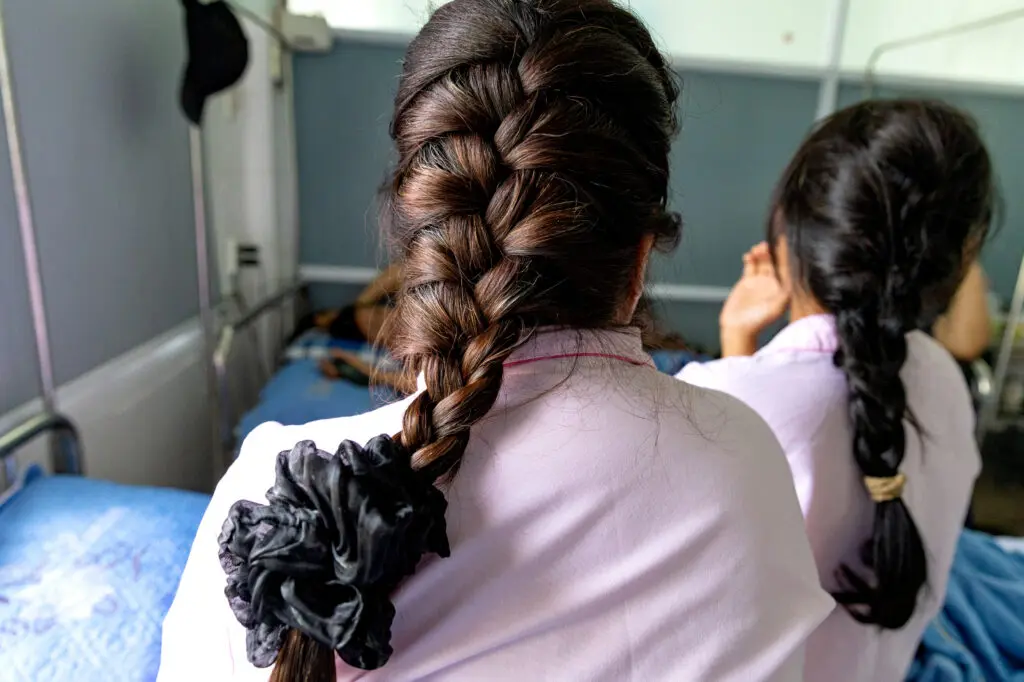
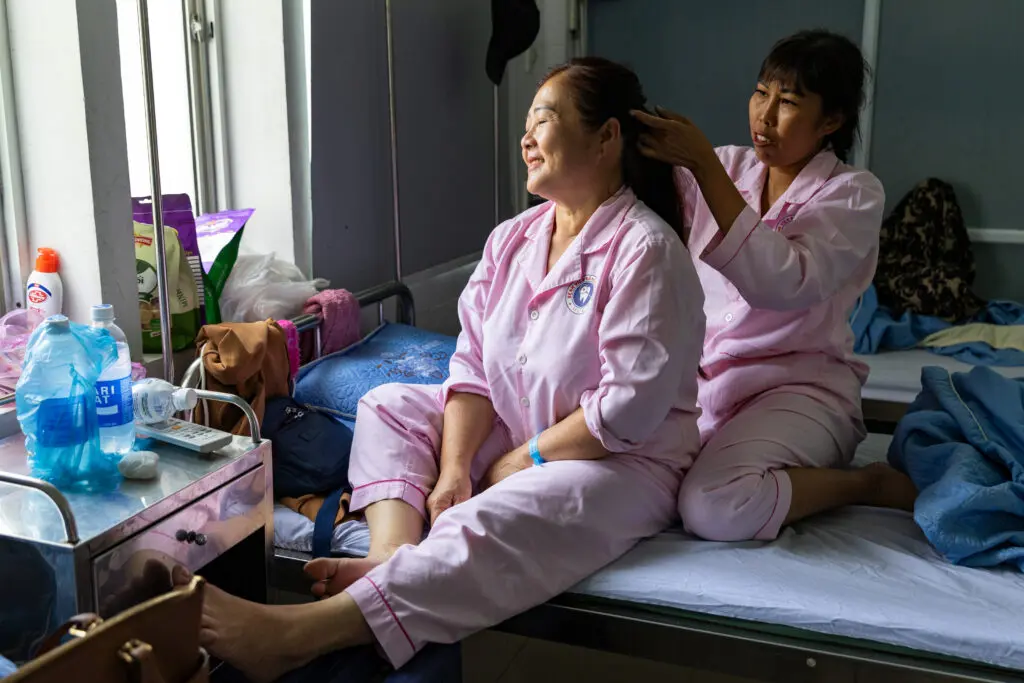
Most of the women have come to Huế without their families. Husbands are working and children are in school. So they look after each other.
Many met during last year’s surgeries, sharing a room and eating every meal together. They came from Hanoi, Saigon, and the highlands near Saigon, but their friendships did not end when they returned home. They stayed in touch.
“I felt a very special sense of empathy with everyone, all believing in their own strength, and everyone deeply yearning to become a more complete person,” Nga says.
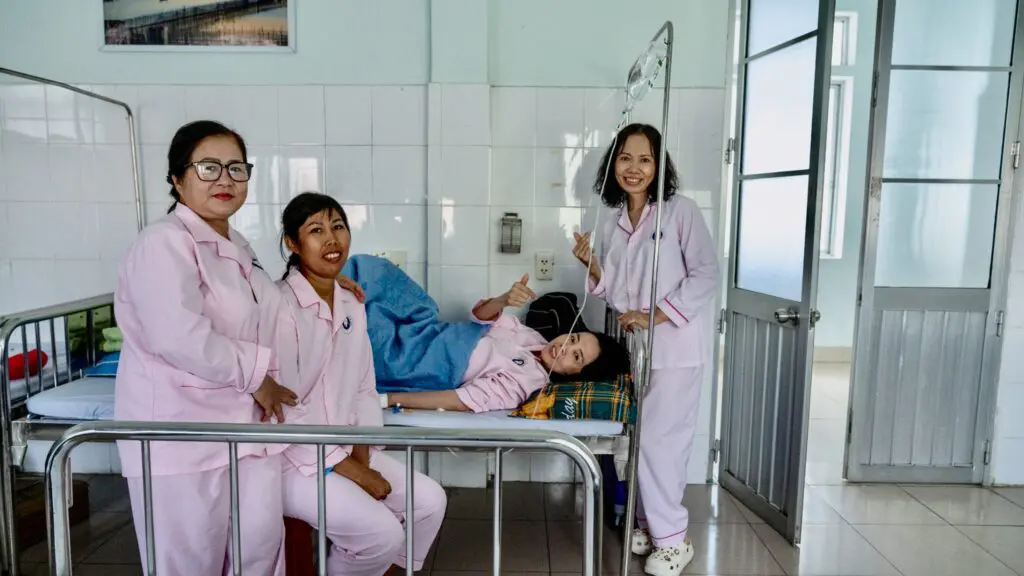
The women call the group their second family: a place to share feelings, exchange advice, and talk openly about experiences that can be difficult to discuss elsewhere.
In Vietnam, where breast cancer is rarely talked about openly, that kind of circle is precious.
Their friendships are part of a larger community of survivors connected through breast reconstruction in Huế. The Pink Bows, a community of more than 100 survivors, grew in part through the efforts of ReSurge patient Son Hoang.
And none of these women would have met here without the surgical program that brought them together.
The surgeons making it possible
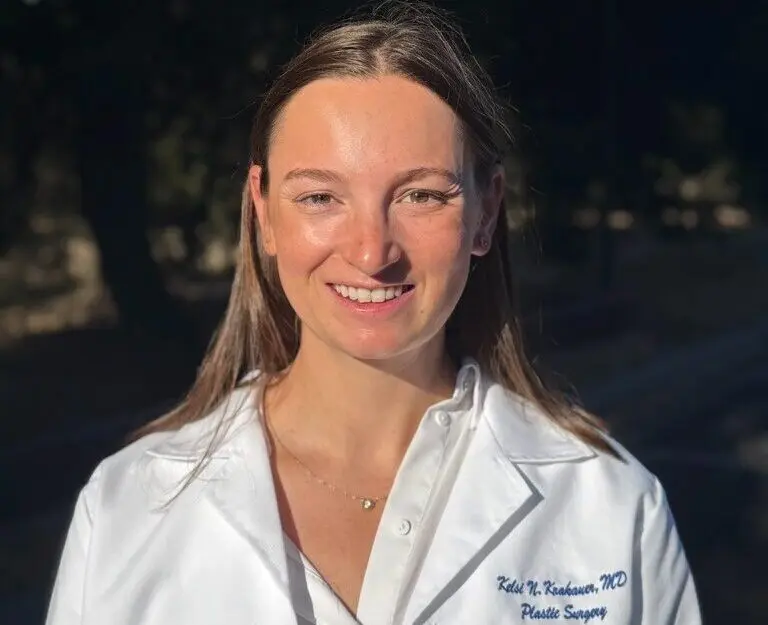
In 2014, Dr. Dung Nguyen, Director of Breast Reconstruction and Microsurgery at Stanford, traveled to Huế with ReSurge for the first time.
She met women who had survived breast cancer and mastectomy but had little to no hope of reconstruction. She brought an idea back to ReSurge: develop a training program so Vietnamese surgeons could offer this care themselves.
For Dr. Nguyen, the work was also personal. She came to the United States as a child refugee from Vietnam, and returning to help women in her home country brings her journey full circle.
“A little bit of help can go a really long way,” she says.
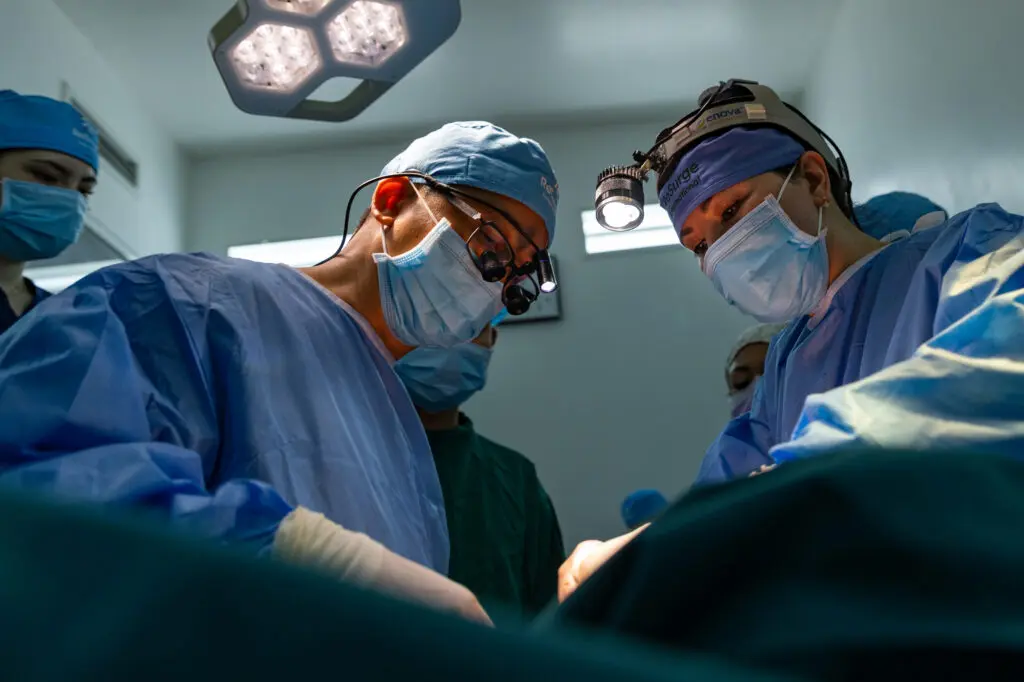
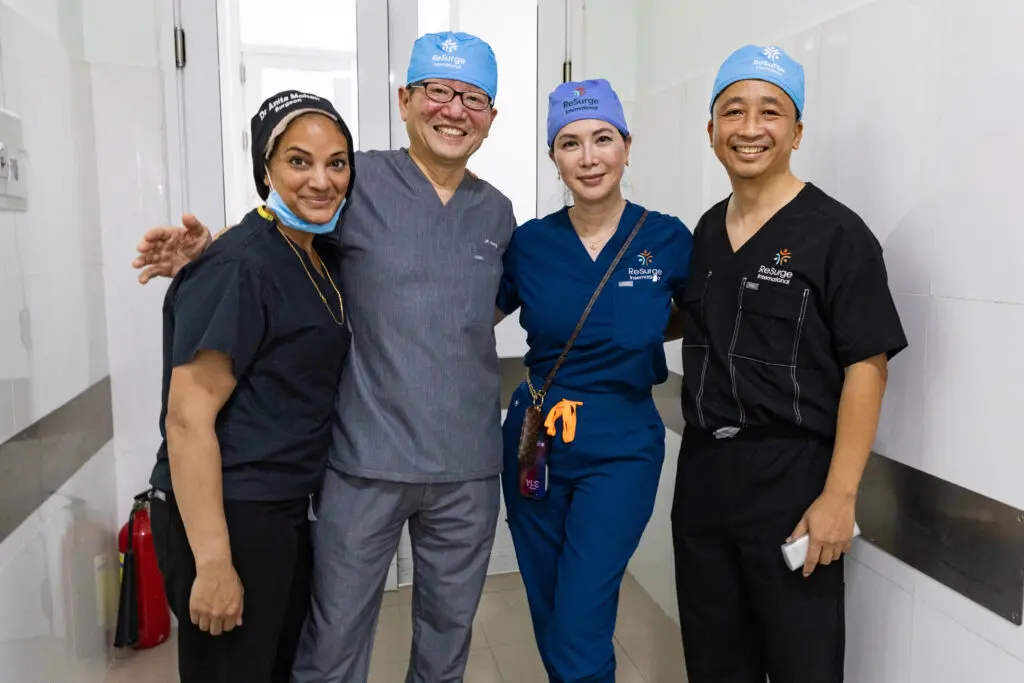
This year marks her eleventh trip. She operates side by side with Dr. Trung Hau Lê Thua, the first plastic surgeon in central Vietnam to perform breast reconstruction, and his team.
What began as one idea has become the first program of its kind in the region, training more than 150 local surgeons.
“With a single surgeon, we can only do so much on any given trip. But if you train multiple surgeons, each surgeon can continue to treat. That’s the model of training the trainers,” says Dr. Nguyen.
Today, Dr. Trung Hau is a ReSurge Surgical Outreach Partner, providing reconstructive surgery to patients year-round, with ReSurge covering the cost of care for those who cannot afford it. He also leads outreach trips to rural communities, where access to specialized surgical care remains limited, particularly for ethnic minority populations. Over decades of partnership and training, Dr. Hau and his team have developed the skills to independently perform many reconstructive procedures, including cleft and ptosis surgery. The next step is building local capacity for more complex procedures, particularly microsurgical breast reconstruction. This advanced training is still in its early stages, but it represents an important step toward making comprehensive breast reconstruction more accessible to women in Vietnam.
“With a single surgeon, we can only do so much on any given trip. But if you train multiple surgeons, each surgeon can continue to treat. That’s the model of training the trainers,” says Dr. Nguyen.
That is the ReSurge model in action: investing in local surgical teams over many years so they can provide increasingly complex care to patients in their own communities, long after visiting volunteers return home.
More than reconstruction
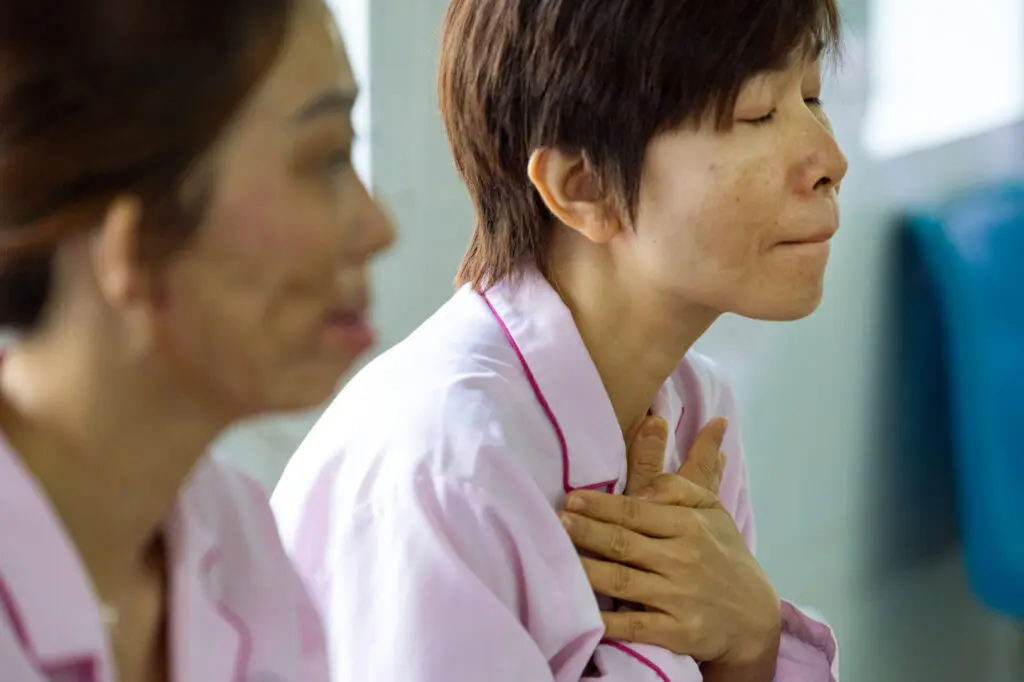
For Nga, the opportunity to have reconstructive surgery has already made a difference. She knows that many women who survive breast cancer never have that opportunity.
“It is very sad for them,” she says, “because it gave me so much more confidence.”
Breast cancer is the most common cancer among women worldwide. Yet in many countries, access to reconstructive surgery remains limited by a shortage of trained surgeons. That is why ReSurge invests in training local surgical teams. Each surgeon trained can go on to care for patients for decades, and train others to do the same.
A ReSurge and Stanford study found that one surgeon in a low-income country can treat 10,000 patients over a career and reach more than 400,000 lives through the surgeons they train.
“You see the ripple effect of the one donation that you make,” Dr. Nguyen says.
In Huế, that ripple effect can be seen not only in the growing number of women receiving reconstruction, but also in the friendships formed along the way. Women who arrived as strangers are now supporting each other through surgery, recovery, and life after cancer. Asked what she would tell other women facing cancer, Nga answers first:
“Always be confident. Confidence gives you the strength to fight the disease.”
Hoa puts it her own way. “As long as we still have breath in us, we have to fight and be strong, so that cancer will fear us.”
Then they go back to talking, and laughing, and Nga is smiling again.