How free, ReSurge-supported surgery is giving a 12-year-old in Bolivia the independence to paint, button his own shirt, and live without limits.
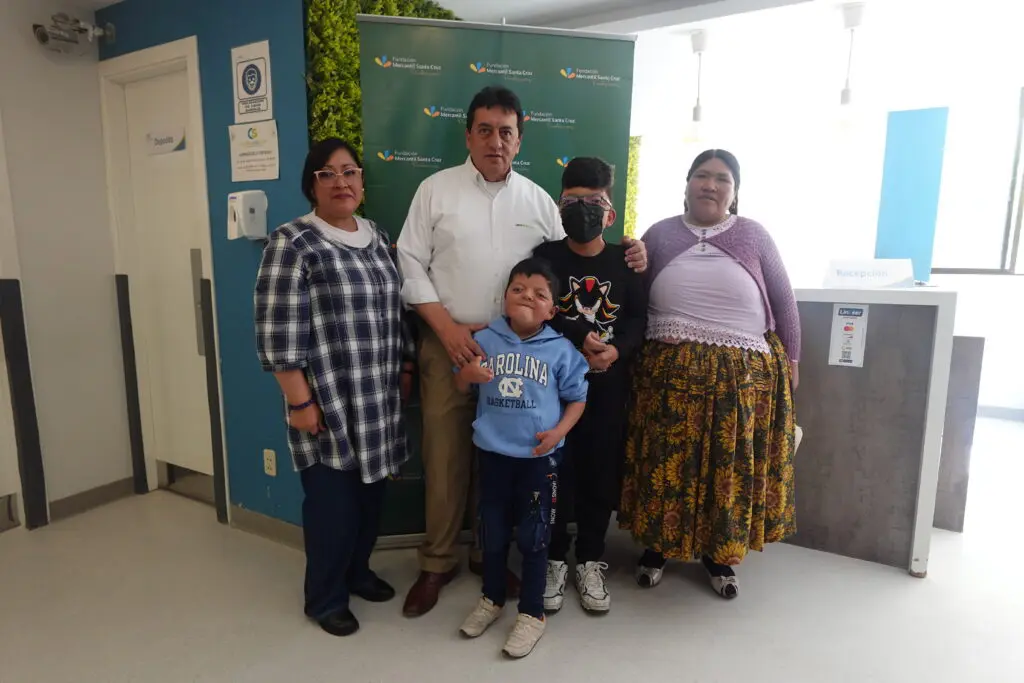
It takes most people about ten minutes to button a shirt. It takes Sebastián Mateo twenty. His mother, Rosemary, wants you to know that he does it anyway, every single time. She tells it not as a hardship but as a small daily victory, the kind that used to feel impossible and now happens quietly every morning.
A rare diagnosis, weeks after birth
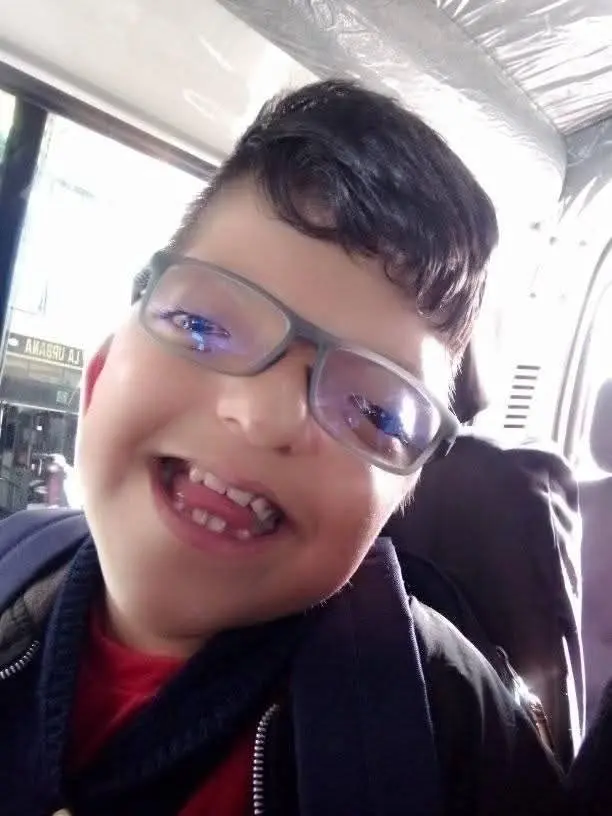
Mateo, now twelve and edging into his teenage years, was diagnosed with Apert syndrome just weeks after he was born. A rare genetic condition recognized worldwide on the list of rare diseases, Apert appears in roughly one in one hundred thousand births and shapes the body in ways that demand years of coordinated, specialized care. In Bolivia, where cases like Mateo’s are uncommon, and the care they require is even harder to find, that reality can feel isolating.
“It is a multidisciplinary condition,” Rosemary explains. “These children need so much attention. Their check-ups have to be correct, and they have to happen at the right time, so that we can give them independence, security, and the chance to develop like any other child.”
For Mateo, Apert meant being born with his fingers completely fused together, his hands closed and covered in a smooth sheath of skin, with no separate fingers at all. Some children with the condition are born with a thumb already formed. Mateo was not. Where there should have been ten fingers, there were two closed hands, and the long work of opening them would fall to a series of careful surgeries.
Rebuilding a hand, one surgery at a time
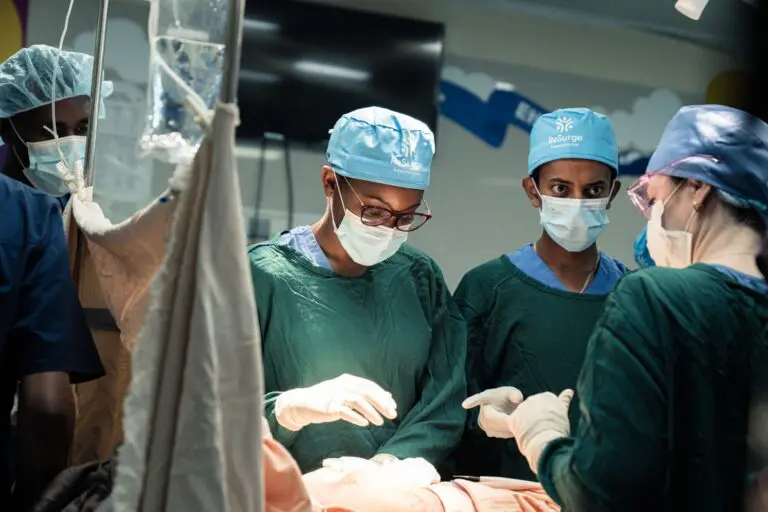
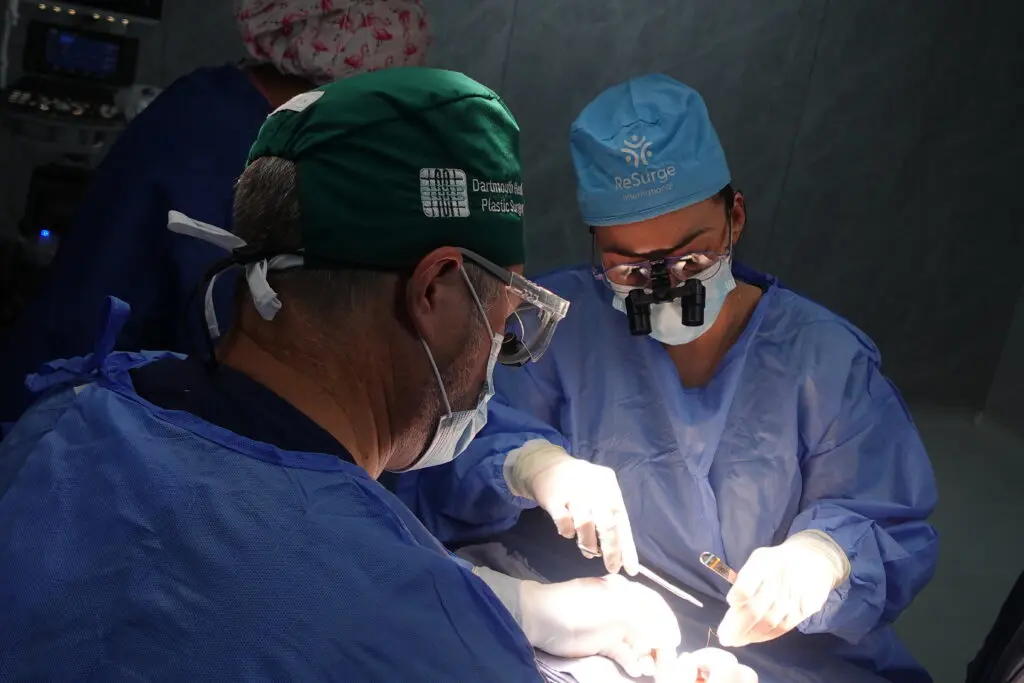
That work has rebuilt his independence one operation at a time. In an earlier stage, the surgical team freed Mateo’s thumb, giving him what his mother calls a “pincer hand,” a working grip where there had been none. Today’s procedure continues that journey on his left hand, releasing his little finger so that, at last, both hands will have the same function.
It is delicate, exacting work. As the doctors explained to Rosemary, because the palm was closed for so long, the small bones underneath can grow into and over one another, or fuse together entirely, which makes each surgery more complex than the last. And as with any operation, there is risk. Rosemary knows that further procedures may lie ahead to keep giving those small fingers their full function. She has chosen to trust the process anyway, with, as she puts it, all her faith placed in God.
What working hands make possible
She has good reason to trust it. She has already watched what these surgeries make possible.
“He dresses himself now. He picks things up. He loves to paint,” she says. “I never imagined he would love art, and he does. To put what he feels into a picture, for me, that is a great deal. It is everything.” The list of what Mateo does with his hands keeps growing. He is a volunteer with the police. He studies taekwondo. He is learning English. “He is such an active boy,” Rosemary says. “The last thing I want is for his hands to hold him back. That is exactly why we came to the campaign, because they gave me peace. I have seen him become independent. I have seen him develop.”
“One word: a miracle”
Asked what ReSurge’s support has meant to her family, Rosemary needs only one word. “A miracle.” She sits with the weight of it, and then explains what she means. As parents, she says, “we are not eternal. We are only here for a moment. We have to leave them ready.” Free surgical care has given her son the ability to stand on his own, and given her something she did not expect to feel: peace about his future.
“Even with all the complexity, he can do his own things. If it takes you ten minutes to button your shirt, it takes him twenty. But he does it. That is what the campaign has given us. Independence in his hands. It has made them miraculous.” Her gratitude reaches past her own family. “You are all the miracle that transforms lives,” she says of the ReSurge-supported team. “Not just mine, but my children’s. This year, three more cases are arriving. Three more families transformed. And more will keep coming.”
A mother’s mission
She and Mateo have made a promise to each other: even after his own surgeries are finished, they will keep showing up to support the families who follow. “Not out of obligation,” she says. “Out of sincere gratitude, from the heart.”
That gratitude has become a mission of its own. Rosemary runs Comunidad de Síndrome de Apert Bolivia, a Facebook community where families across the country find information, connection, and one another, and she has helped bring families with Apert syndrome from all over Bolivia toward the care their children need. She is proud, and a little heartbroken, to be one of very few parents doing this kind of guidance work in Bolivia. Much of what appears on the page is written by Mateo himself. “He is the one who lives it,” she says. “He is the one who uploads it, because he understands the condition from the inside.” Her hope is simple: to inform, to build community, and to make a rare condition visible in a place where too few people know its name.
“Not a weakness, but a strength”
Her message to anyone who has never heard of Apert syndrome is the same one she and her community live by. “Apert syndrome is not your weakness. It is your strength. It is not what makes you. We are the ones who make up the world of Apert. Don’t give up.” It is exhausting, she admits, physically, financially, and emotionally. But she has seen the other side of it. She has seen children with this condition grow into brilliant, capable people, professionals thriving despite their limits. “If that is possible,” she asks, “why not say that Bolivia can be there too?”
She has seen the miracles. And with every surgery, every freed finger, every family she reaches, there will be more.
Written by Oscar Guzmán
ReSurge Supporter
Director of Communications at Doximity