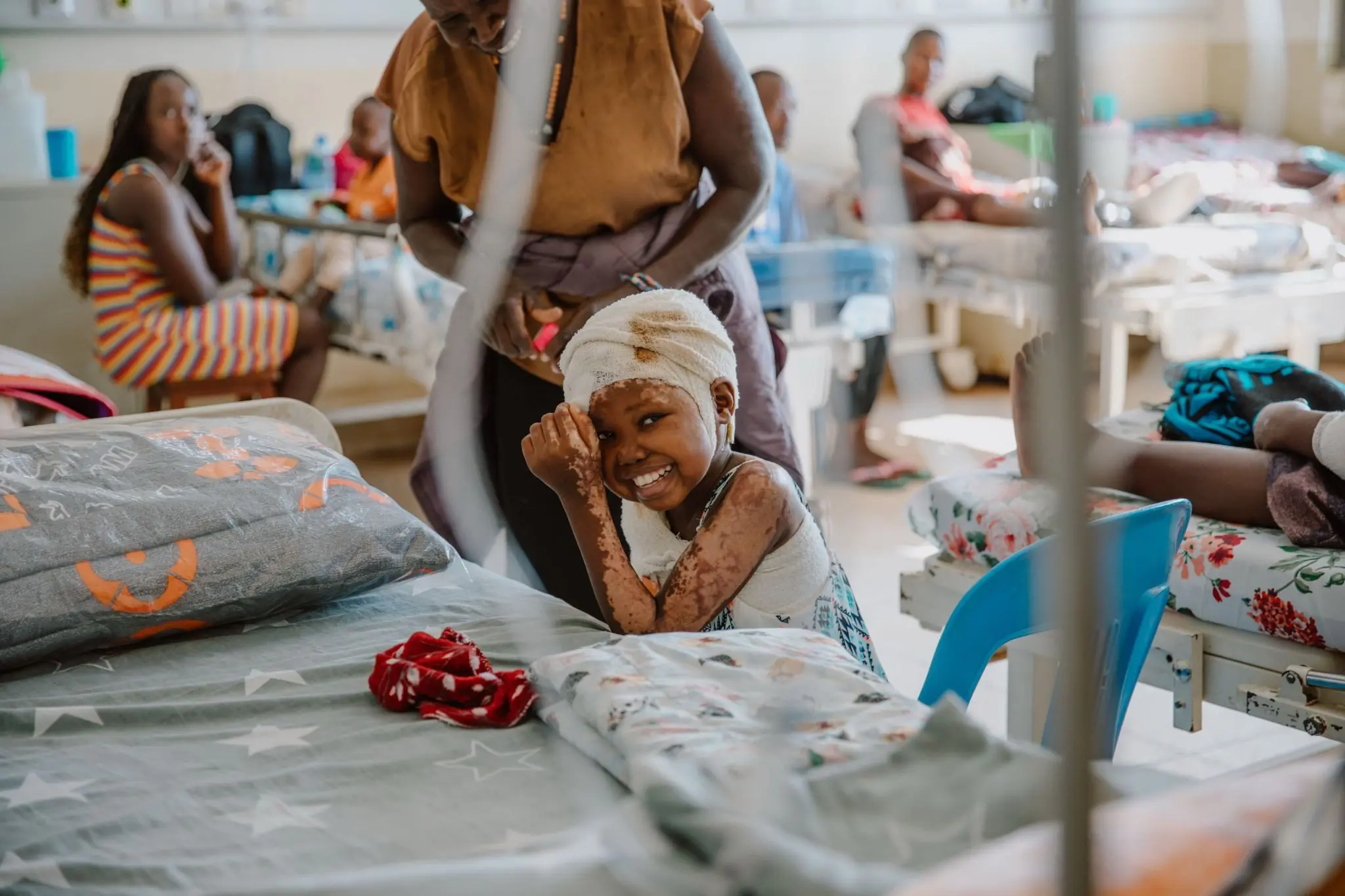
In rural Uganda, nine-year-old Razia was alone with her baby sister in their family’s fieldside shelter while her parents worked nearby. No one knows how it started, only that the shelter caught fire.
Razia escaped. But when she realized her sister was still inside, she ran back in to save her.
Her sister suffered catastrophic burns and did not survive. Razia survived — with burns covering 60% of her body.
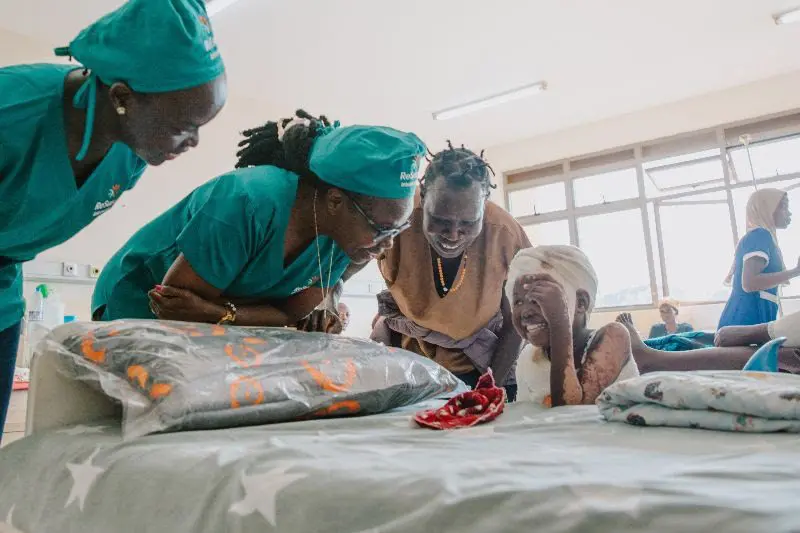
Katie Osborn and Dr. David Kulber — who volunteer with ReSurge International and its partner organization Ohana One, which Dr. Kulber founded — acted swiftly to get Razia the care she needed. She was transferred to Kiruddu Hospital, Uganda’s only national burn center, where ReSurge maintains a year-round presence through local partners providing comprehensive care.
The Nurse Who Wouldn’t Look Away
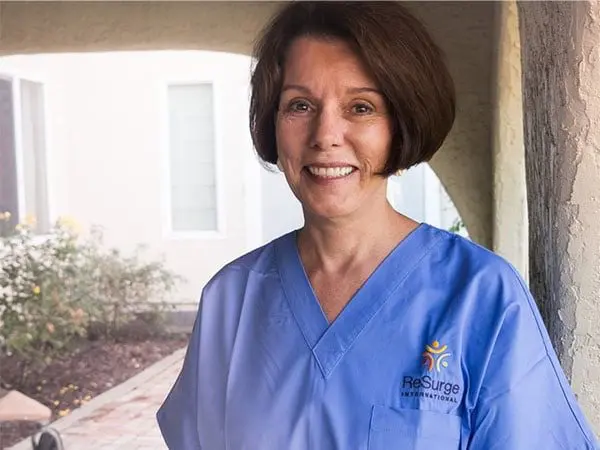
Katie Osborn, a critical care nurse and longtime ReSurge volunteer, met Razia by chance, on a remote Ohana One medical trip across the Nile into northern Uganda. She was the only nurse on the ward that day.
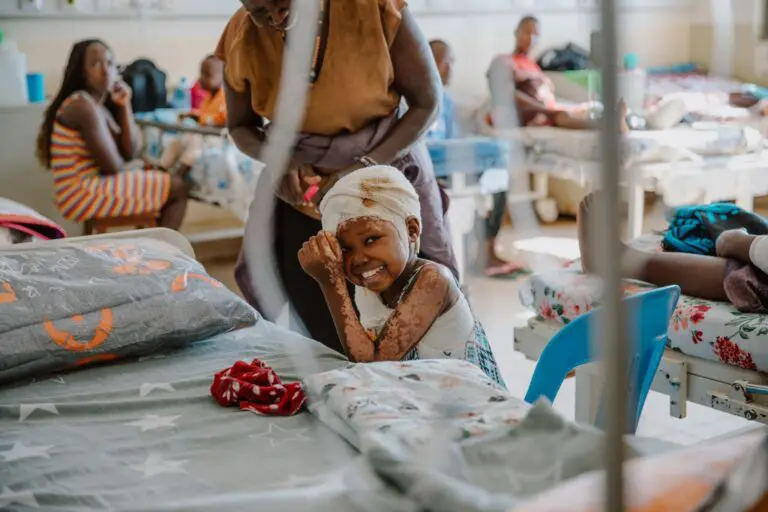
Tucked in the corner of the room was a little girl no one seemed to be tending to. Katie asked who she was. The nurses just shook their heads. Razia had been there since June. She wasn’t eating. Her skin grafts weren’t taking. Her donor sites were infected. The staff, stretched impossibly thin, were doing what they could — mostly just keeping her comfortable.
Katie walked over anyway. She offered Razia a sucker, and got back something she wasn’t expecting: a radiant, unguarded smile.
“I just couldn’t give up on her,” Katie said.
That smile changed the course of Razia’s care. Katie helped with a dressing change, then went to find the visiting physician, Dr. Kulber. “What happened?” he asked, sensing the urgency in her voice. She told him Razia’s story instead. He looked at her and said, “I see what you mean — we’ve got to help here.”
What followed was a scramble of phone calls, emails, and a shared conviction that Razia deserved a chance. Katie quickly connected with ReSurge International, whose local on-the-ground partners at Kiruddu Hospital were eager to help. Within days, an ambulance had driven ten hours to reach her. Razia made the journey to Kiruddu National Referral Hospital, ReSurge’s partner hospital and Uganda’s only national burn center.
“That little girl has lived twenty lives,” Katie said.
Burns: A Crisis Hidden in Plain Sight
Razia’s story is devastating. It is also far from rare.
According to the World Health Organization, approximately 180,000 people die from burn injuries every year, and more than 90% of those deaths occur in low- and middle-income countries. Burns are among the most common causes of non-fatal childhood injury globally, and in the WHO African Region, children under five die from burns at more than twice the rate of children worldwide.
The risk isn’t random. It follows the fault lines of poverty. Families living in temporary shelters, cooking over open flames, without access to fire safety or emergency care, face a danger that is largely invisible to the rest of the world. And when burns do happen, the path to reconstructive care — the surgeries that restore movement, function, and dignity — is out of reach for most.
Girls and women bear a particular burden. Research shows they suffer significantly more fire-related injuries than men, largely due to cooking accidents and unsafe household conditions, and that women and girls in middle-income settings have lower odds of receiving surgical treatment following a burn injury than their male counterparts.
The average age of a ReSurge patient is 12 years old. Children like Razia — and like Jonas in Tanzania, who survived a severe burn as a toddler — are at the center of this crisis, and at the center of our work.
Care Where It’s Needed Most
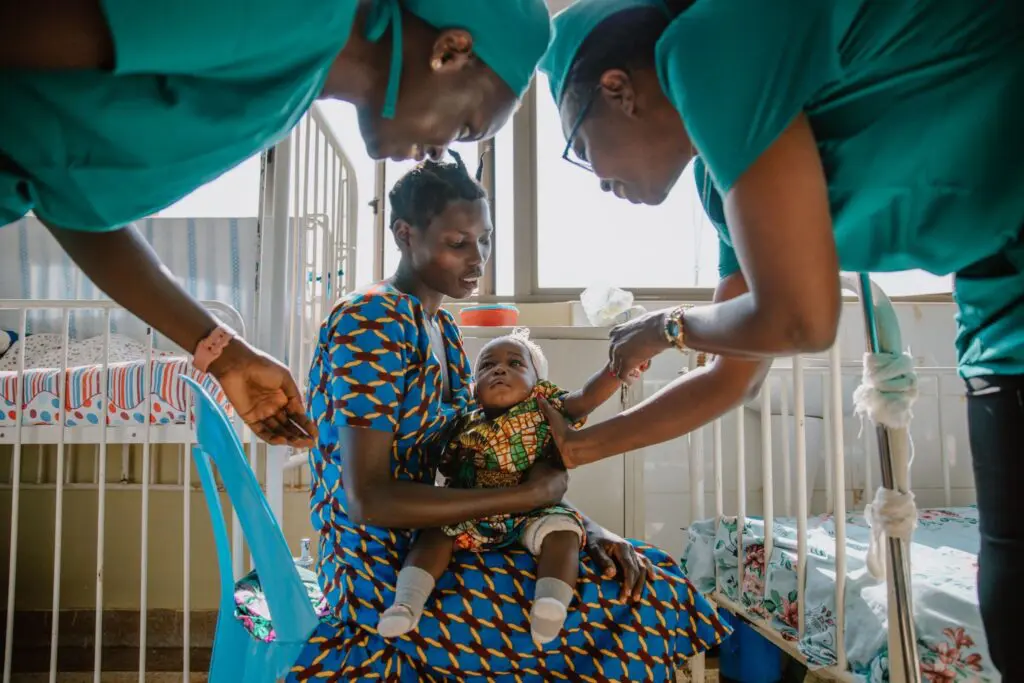
Razia got treated at Kiruddu National Referral Hospital under the care of ReSurge Surgical Partner Dr. Rose Alenyo, one of the leading burn and reconstructive surgeons in East Africa, alongside ReSurge Matolase Scholar Dr. Ezati Ayikoru Daphine.
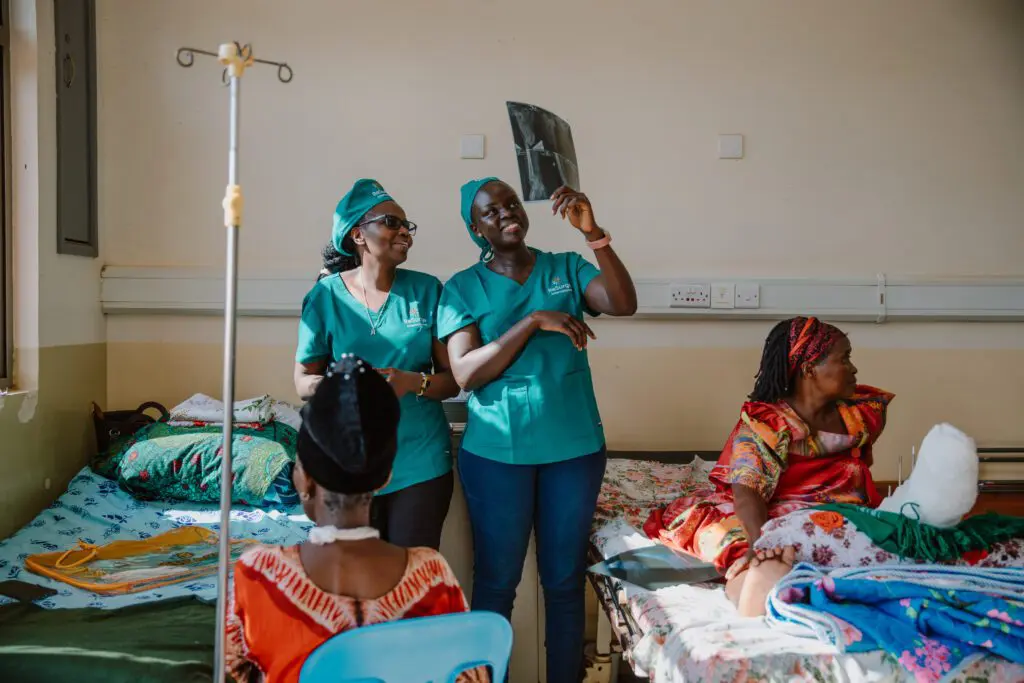
Razia got treated at Kiruddu National Referral Hospital under the care of ReSurge Surgical Partner Dr. Rose Alenyo, one of the leading burn and reconstructive surgeons in East Africa, alongside ReSurge Matolase Scholar Dr. Ezati Ayikoru Daphine.
“I’m writing to you about a patient I recently cared for who deeply moved me,” Dr. Ezati wrote in a recent letter. “I have been helping to care for Razia at Kiruddu Hospital, Uganda’s national burn center, alongside ReSurge Surgical Partner Dr. Rose Alenyo. Razia has been through multiple surgeries. She is nine years old, and her courage is extraordinary. Even as she recovers, she colors bright pictures and shares them with the doctors and other children healing beside her. She brings light to the pediatric burn ward.”
Her recovery has been anything but a straight line. Grafts that didn’t take at first. Stretches where her appetite wouldn’t return. A slow, hard-won climb, tracked by the volunteers, nurses, and surgeons who refused to look away.
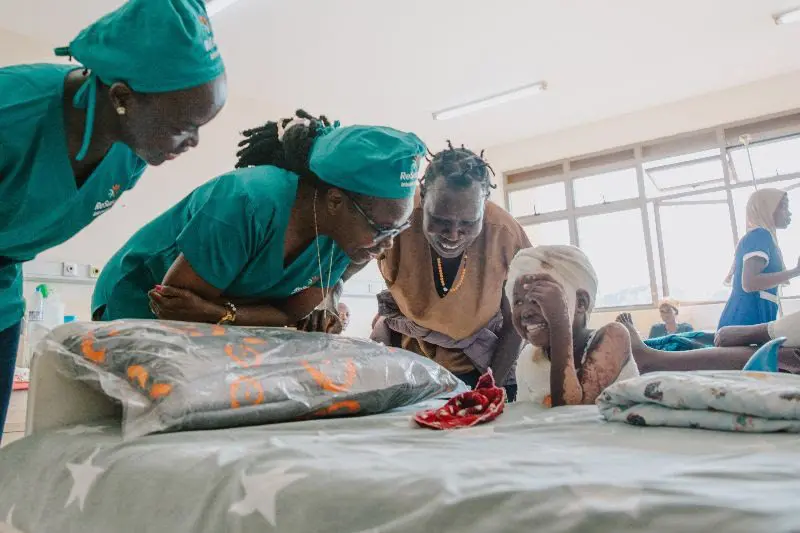
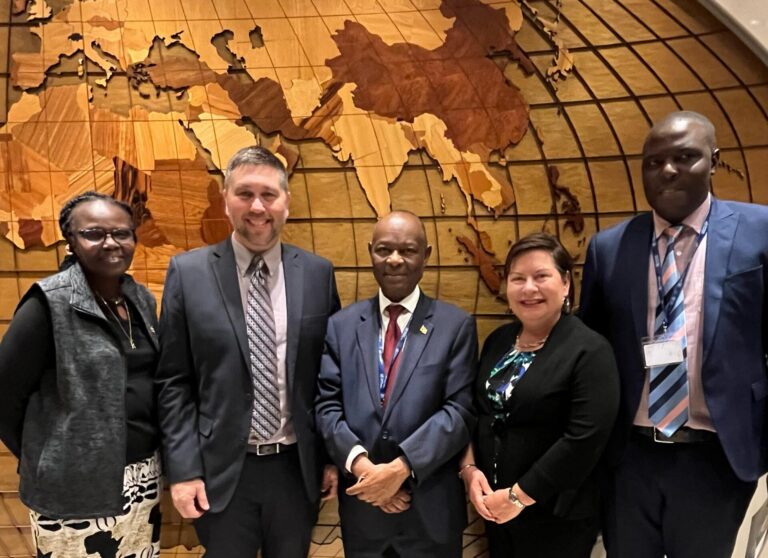
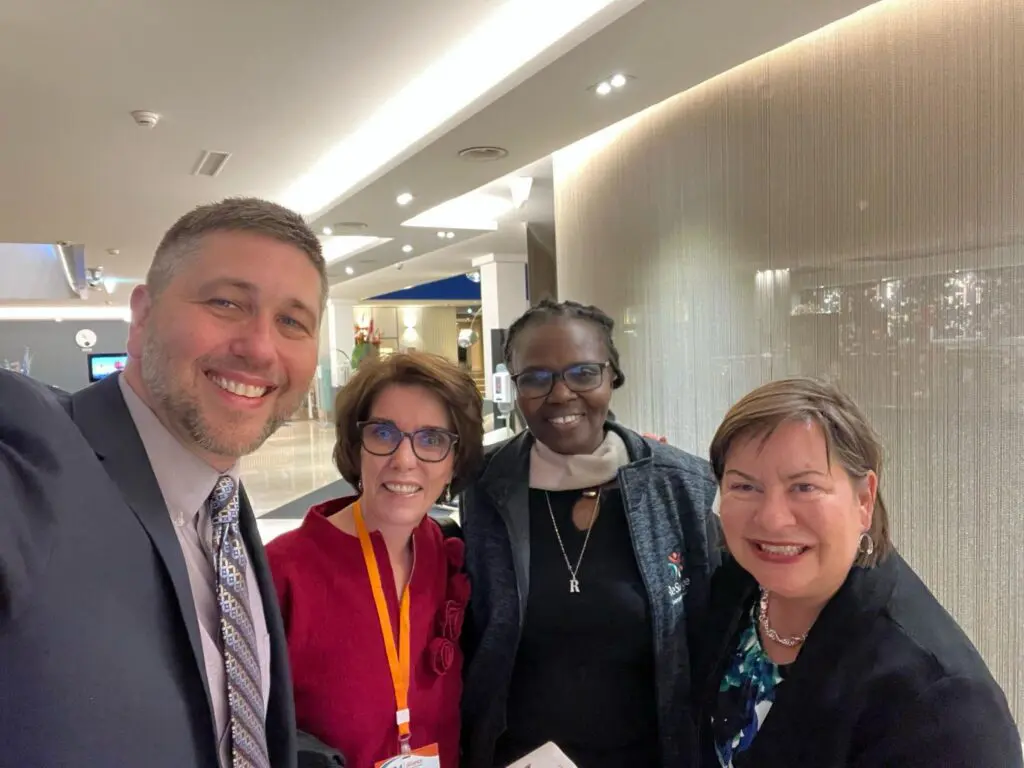
When Katie later met Dr. Alenyo in person at the 79th World Health Assembly in Geneva, the surgeon told her, “Katie, you worry so much about that little girl. I am not going to let anything happen to her.”
Razia will carry the marks of that day for the rest of her life. She is roughly 60% scarred across her upper body and will never grow hair again. But she is alive, healing, and — by every account from the people caring for her — full of light.
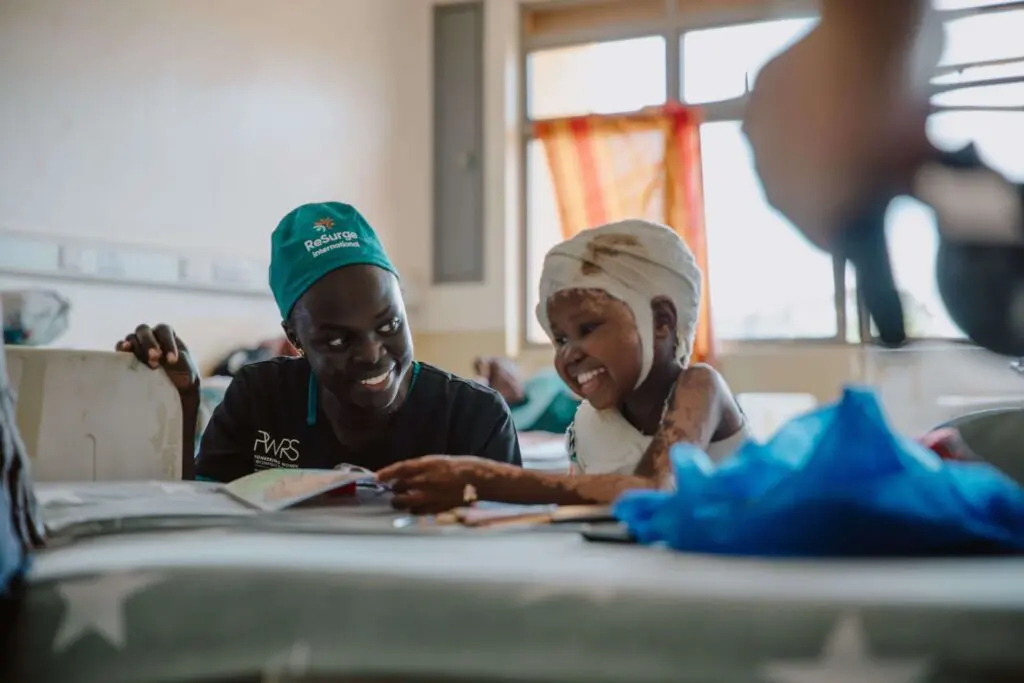
This is what reconstructive surgery makes possible: not just physical healing, but the restoration of a child’s future.
Going Home
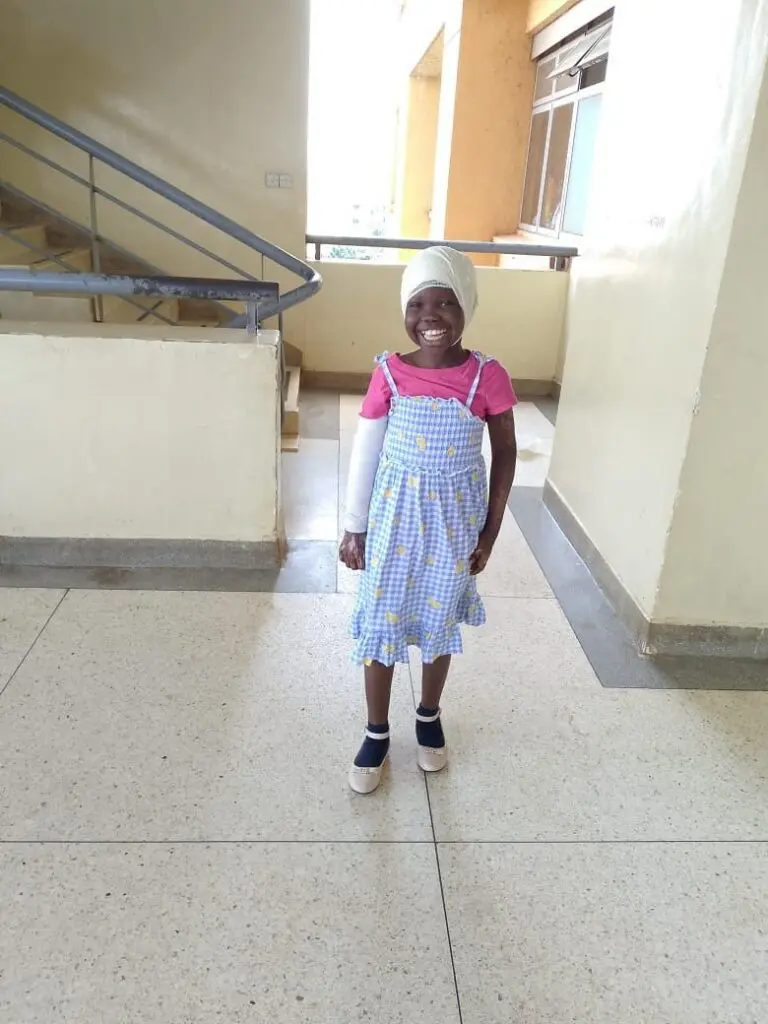
Now, eight months after that first meeting on the ward, Razia is finally home.
Eight months of surgeries, repeat grafting, and round-the-clock determination from everyone who had refused to give up on her. And then, finally, the news the whole team had been working toward: Razia became well enough to return to her village, and to her family.
On the journey back, she had one request for her father before anything else — pineapples, so she could share them with the siblings she hadn’t seen in eight months.
Getting her home took the same kind of village that got her through treatment in the first place. Pipeline Worldwide helped secure a safe home near the hospital for her first month of recovery outside its walls. Dr. David Kulber, Dr. Richard Newton Iranya, and the Uganda surgical teams coordinated her care through to the end, making sure her ongoing checks and dressings were never left to chance. The Musculoskeletal Transplant Foundation supplied the specialty grafts that were critical to her healing. And the donors and supporters who gave along the way funded the medical supplies, transport, food, and housing that made every step of her recovery possible.
Razia and her father have sent their deepest thanks to everyone who played a part in bringing her home.
She still carries the marks of that day, and she always will. But she is home, surrounded by her family, sharing pineapples with the siblings she missed most.
A Moment That Matters
There are many more children like Razia still waiting. She is one of thousands across East Africa who need reconstructive burn care, and most have nowhere to turn.
That’s why this moment matters. ReSurge is in the middle of a transformational expansion across Uganda and Tanzania, scaling from approximately 300 cases per year to more than 2,000 cases annually. This expansion includes surgery, physiotherapy, and the training of local surgeons like Dr. Ezati, building the infrastructure so that care like Razia’s becomes the norm, not the exception.