

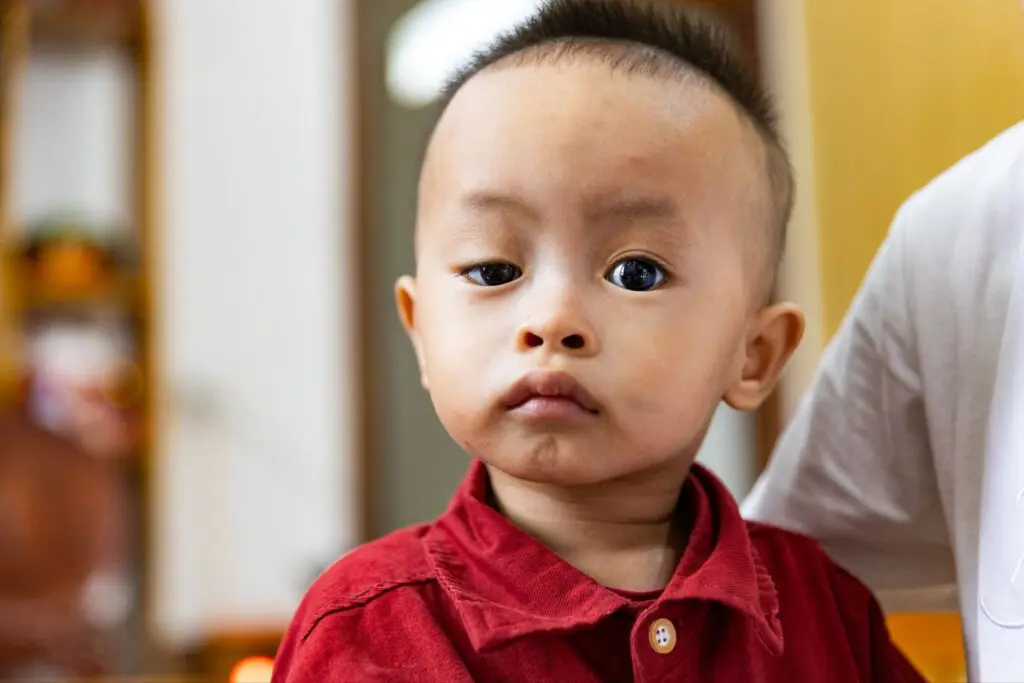
When Ha Nhi was two months old, her mother Loan noticed something small but persistent: her daughter’s eyes didn’t open the way they should. One eyelid drooped, giving her a sleepy and half-closed look that never fully went away. A local doctor told Loan it was too early to know the diagnosis. Loan patiently waited and watched.
One year later, without signs of improvement, she had an answer. Her daughter had congenital ptosis, a drooping eyelid caused by a muscle that hadn’t developed properly before birth (the levator palpebrae superioris). Without this muscle to raise the eyelid, it was blocking Ha Nhi’s vision. Left untreated, it could have cost her daughter sight in that eye.
What Is Ptosis?
Ptosis (pronounced TOE-sis) is the medical term for a drooping upper eyelid, as defined by the American Academy of Ophthalmology. It happens when the levator muscle, the muscle that lifts the eyelid, is too weak, stretched, or improperly formed or connected to work the way it should. The lid sags lower than normal, sometimes only slightly, sometimes far enough to cover the pupil entirely, as it did for Ha Nhi.
It can affect one eye or both. In children, it’s almost always congenital, meaning it is the result of a levator muscle that simply didn’t develop fully, according to the American Association for Pediatric Ophthalmology and Strabismus. Left alone, a drooping lid can block light from properly reaching the retina during the years when a child’s visual system is still forming, leading to amblyopia, or permanent vision loss in the affected eye, along with astigmatism and delayed development, per Nemours KidsHealth. When congenital ptosis is caught and treated early, as Ha Nhi’s was, a child’s sight can develop completely normally.
A Family in a Remote District Finds Help
Loan and her family live in A Lưới, a mountainous district near Vietnam’s border with Laos, the kind of remote community where a pediatric eye surgeon isn’t readily available. Additionally, families often don’t know where to start looking for treatment, let alone afford treatment. Around the time her local pediatrician recommended surgery, Loan happened to meet another mother from A Lưới whose own daughter had the same condition. That mother pointed her toward ReSurge International, a global reconstructive surgery nonprofit on a mission to increase access to reconstructive surgery in low- and middle-income countries. ReSurge trains and partners with local surgical teams to deliver free care and build surgical capacity.
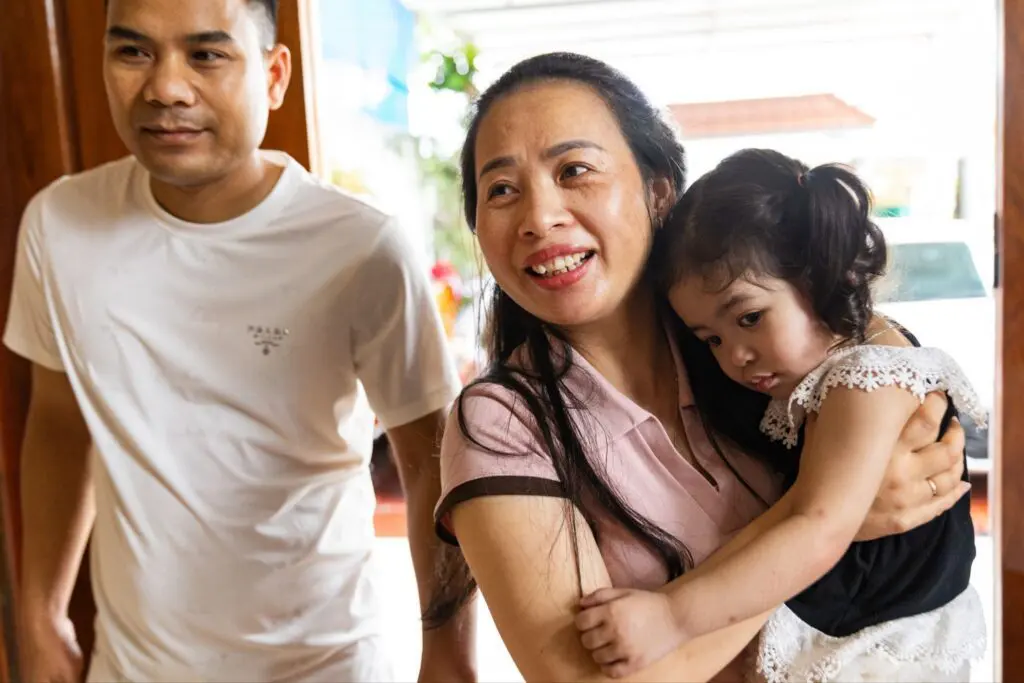
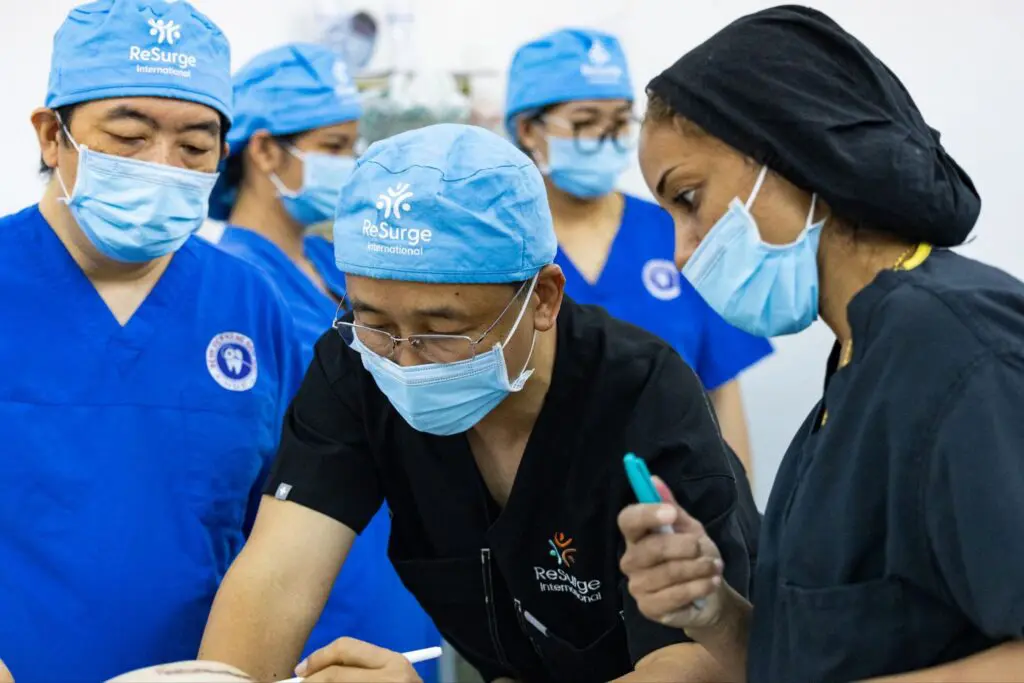
In the months leading up to the surgery, Loan sent the medical team photos and videos of Ha Nhi’s eyes so they could track her condition remotely, long before they ever met in person. Ha Nhi’s surgery was performed by ReSurge partner surgeon Dr. Trung Hau Lê Thua, a Hue-based reconstructive surgeon who has partnered with ReSurge for years. Loan says she has no words for how worried she was during the 2-hour wait while her daughter was in the operating room. When it ended, Ha Nhi’s cry, loud and strong, was the first sign she’d come through it well. “For me, what mattered most was for my daughter to be able to see as normally as anyone else,” she said.
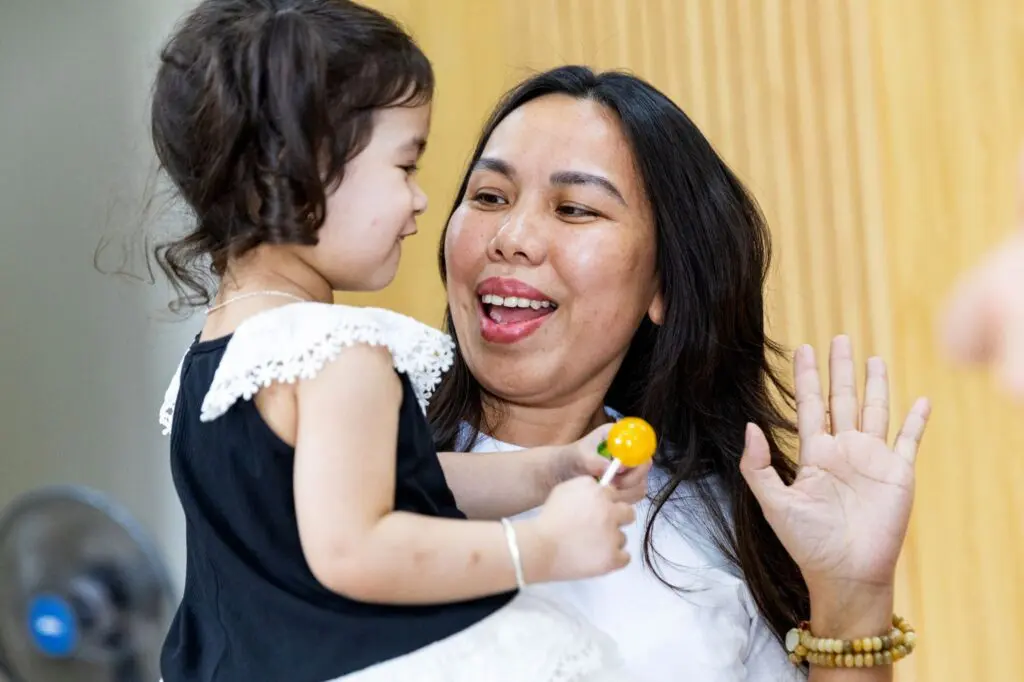
Her recovery afterward was smooth and quick. ReSurge staff member Hong and volunteer anesthesiologist Hien visited Ha Nhi and her family in person to see her progress for themselves.
Loan has since connected two more families to ReSurge’s local partners, including a neighboring family whose ten-year-old son is still hoping for the same surgery Ha Nhi received, and another mother in A Lưới, Thuan, whose son Dang was born with a similar condition and is now navigating that same path toward care.
Building Access to Surgical Care That Lasts
ReSurge’s model is built to help children like Ha Nhi by training and partnering with local surgeons, anesthesiologists, and hospitals so that reconstructive surgical care, for ptosis and dozens of other conditions, is available year-round rather than only when a visiting international team happens to be in the country.
That model is why a single donation can go so much further than funding one surgery. According to a ReSurge and Stanford University study, just one surgeon trained in a low-income country will go on to treat an average of 10,000 patients over their career — and if that surgeon becomes a trainer themselves, teaching the next generation, their impact can extend to more than 400,000 lives over time.
Thirty Years of Partnership in Vietnam
Ha Nhi’s care was possible because ReSurge International has worked in Vietnam for 30 years, making it one of the longest continuously operating U.S.-based nonprofit organizations in the country. ReSurge staff members like Hong and volunteers like Hien have spent decades building trusted relationships with local communities, helping families in remote districts find their way to specialized reconstructive surgical care. Beyond patient care, ReSurge trains and partners with local surgeons year-round, expanding sustainable access to reconstructive surgery rather than relying solely on occasional international visits. The need is real, in Quang Ngai province alone, child welfare officials estimate roughly 3,000 children face congenital conditions similar to Ha Nhi’s.
Ptosis repair is one part of ReSurge’s much broader scope of reconstructive surgery — cleft lip and palate repair, burn scar reconstruction, hand surgery, and more. The thread running through all of it is the same one Loan named without hesitation: being fully functional and capable of completing the activities required in daily life.
A Future She Can See
Today, Ha Nhi is growing up with the chance to experience the world the way every child should, with clear vision and endless possibilities.
Her story is about more than ptosis. It is about what becomes possible when specialized care reaches the communities that need it most, when local surgeons have the training and resources to provide that care year-round, and when one family’s experience inspires hope for many others.
Every child deserves the chance to see, learn, play, and thrive. For Ha Nhi, that future began with one surgery. Through partnerships that build local surgical capacity, thousands more children can have that same opportunity.
Frequently Asked Questions About Childhood Ptosis
Is ptosis in children dangerous?
Ptosis itself isn’t life-threatening, but if the eyelid blocks the pupil during early childhood and is not corrected while the visual system is developing it can cause permanent vision loss (amblyopia).
At what age should a child with ptosis have surgery?
It depends on severity. If the eyelid is covering the pupil and putting vision at risk, doctors may recommend early surgery, even in infancy or toddlerhood, as in Ha Nhi’s case. Milder cases may be monitored and treated later. A pediatric reconstructive surgeon should evaluate each case individually.
Can ptosis surgery be done on a very young child?
Yes. Ha Nhi was under two years old at the time of her surgery. Pediatric ptosis repair is a well-established procedure, typically lasting one to two hours under careful anesthesia monitoring.
What causes congenital ptosis?
Most cases result from the levator muscle not developing fully before birth, therefore rendering it non functional. It isn’t caused by unintentional harm during pregnancy, and it usually isn’t hereditary — as in Ha Nhi’s case, where no one else in the family had the condition.
Does ptosis come back after surgery, or do children need follow-up care?
Some children need minor revisions. Doctors often monitor eyelid closure afterward, since a lid that doesn’t fully close during sleep can leave the eye dry. Ongoing follow-up care, provided by local partners like ReSurge’s Vietnam team, matters as much as the surgery itself to continue to monitor patients as they recover.
At what age should a child with ptosis have surgery?
It depends on severity. If the eyelid is covering the pupil and putting vision at risk, doctors may recommend early surgery, even in infancy or toddlerhood, as in Ha Nhi’s case. Milder cases may be monitored and treated later. A pediatric reconstructive surgeon should evaluate each case individually.
Who is ReSurge International?
ReSurge International is a global health nonprofit that provides free reconstructive surgical care to people with treatable conditions — including ptosis, cleft lip and palate, burn scar contractures, and hand injuries — in low-income countries across Africa, Asia, and Latin America. Its vision is a world where no one has to live with a treatable or preventable disability because of their geography or income.
How does ReSurge provide free surgery?
ReSurge trains and partners with local surgeons, anesthesiologists, and hospitals in low-income countries so that reconstructive surgical care is available year-round. Once a ReSurge partner site is certified, we reimburse surgeries on patients with low-incomes so they can access free care. Learn more
What other conditions does ReSurge treat besides ptosis?
Reconstructive surgery restores normal function from an accident or trauma, a congenital condition, or cancer. Traffic accidents, burns, missing digits, cleft palates, and cancer reconstruction are all common conditions reconstructive ReSurge surgeons treat.
At ReSurge, we are one of the few organizations to provide the full scope of reconstructive surgical care for those in low-income communities. We provide free treatment to the patient and build local surgical capacity for long-term solutions.
How long has ReSurge worked in Vietnam?
ReSurge International has worked in Vietnam for 30 years, making it one of the longest continuously operating U.S.-based NGOs in the country.
How is ReSurge funded, and how can I support its work?
ReSurge is funded primarily by individual donors, along with grants and foundation support. Gifts fund the surgical teams, local training partnerships, and follow-up care that make stories like Ha Nhi’s possible, and can be made directly at resurge.org.