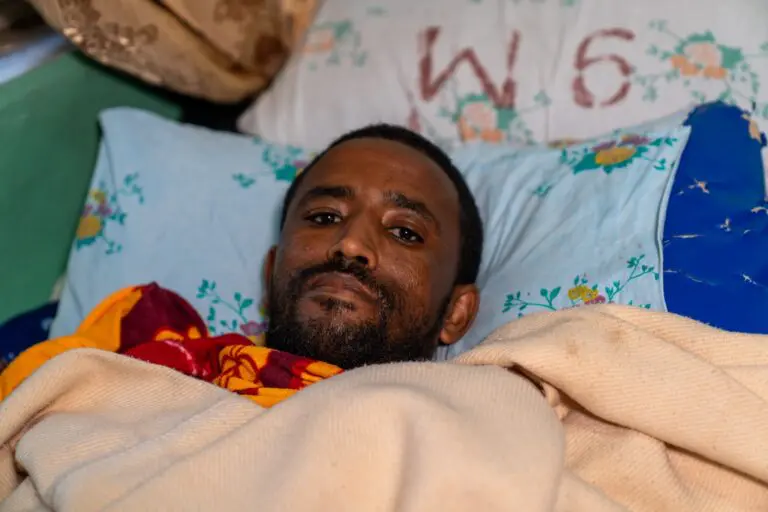
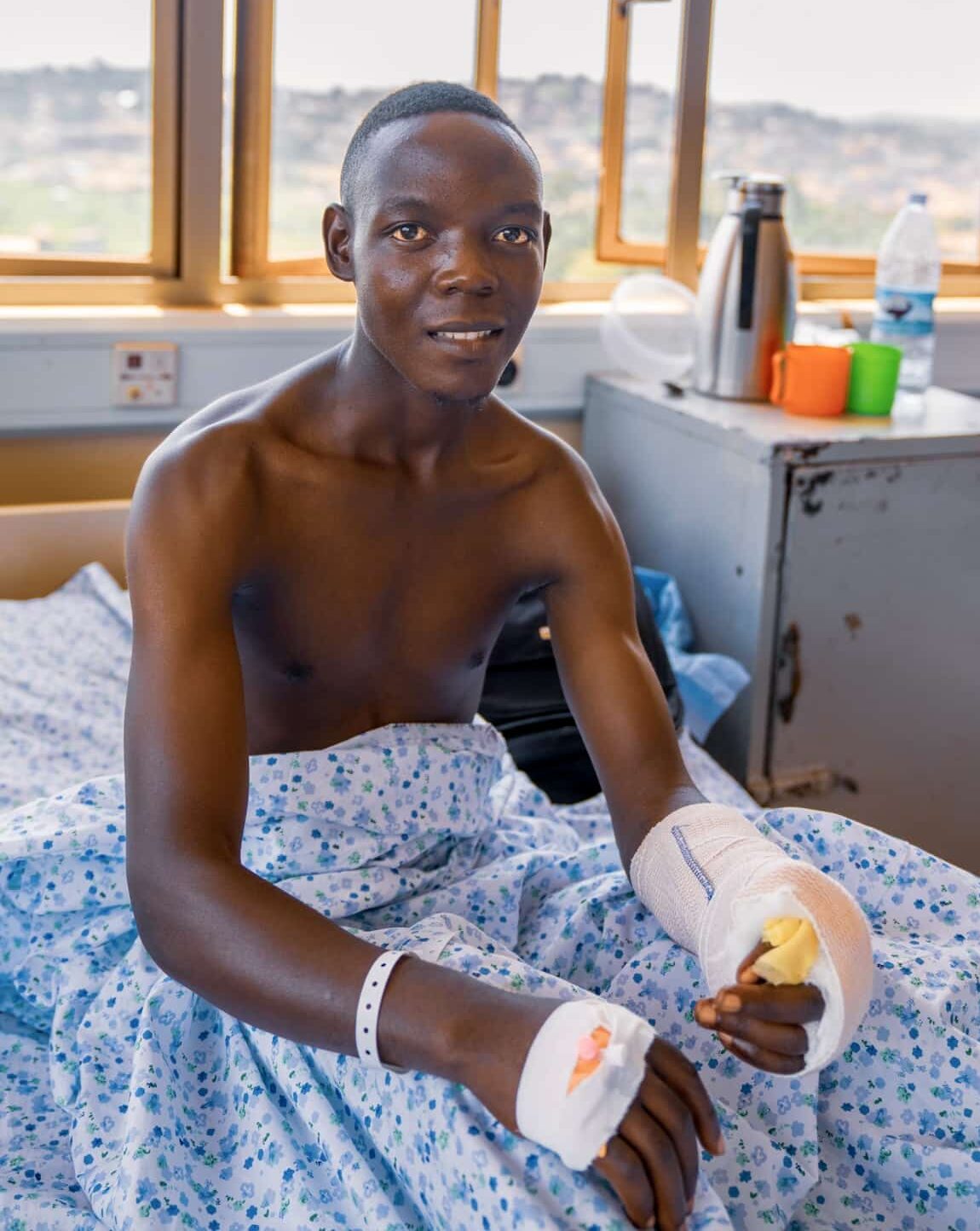
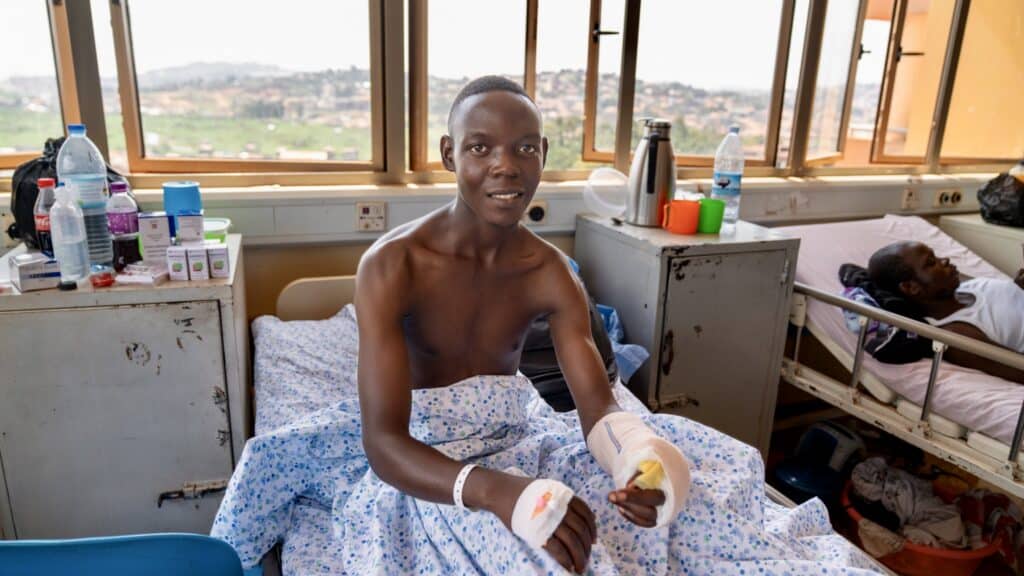
Augustine Tumwesigye is 25 years old. He is a cattle farmer from Wakiso District in central Uganda, a young man who built his livelihood with his hands.
One day, while operating machinery on his farm, the unthinkable happened: the equipment sliced off his dominant thumb. In an instant, his ability to grip, to work, to provide for himself and his family was gone.
Workplace injuries like Augustine’s are far more common and far more devastating than most people realize. Globally, an estimated 395 million workers suffer non-fatal work-related injuries every year, with the majority occurring in low- and middle-income countries. When a breadwinner is injured, the consequences ripple outward. Medical costs drain household savings. Work stops. Children leave school. A single injury can unravel years of economic progress, not just for one person, but for an entire family and community.
This is why reconstructive surgery is not only life-transforming, it is an economic intervention. According to the World Bank, every $1 invested in surgical care in low- and middle-income countries generates $10 in economic returns through restored productivity, reduced poverty, and stronger communities.
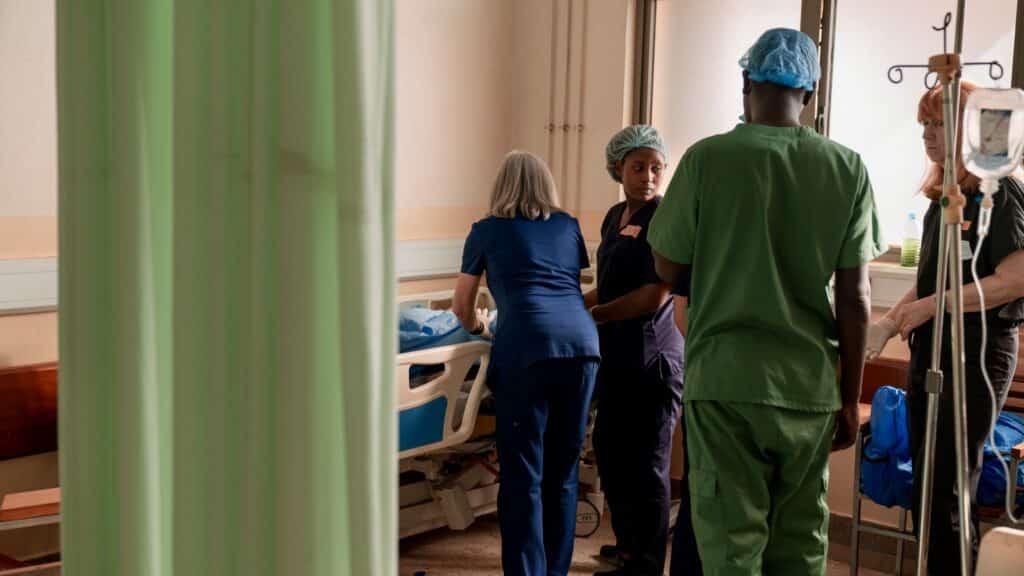
Pollicization surgery: restoring thumb function after traumatic amputation
After his injury, Augustine was connected to Kiruddu National Referral Hospital — a ReSurge hub in Kampala — by Philbert, a local ReSurge coordinator who recognized the severity of his injury and knew where to send him. His case was severe. To restore meaningful function to his hand, he would require a pollicization — one of the most technically demanding procedures in reconstructive surgery, in which the index finger is surgically repositioned and transformed into a functioning thumb.
Losing a thumb, especially the dominant one, is not just a physical wound. It is the loss of a person’s connection to their work, their family, and their future.
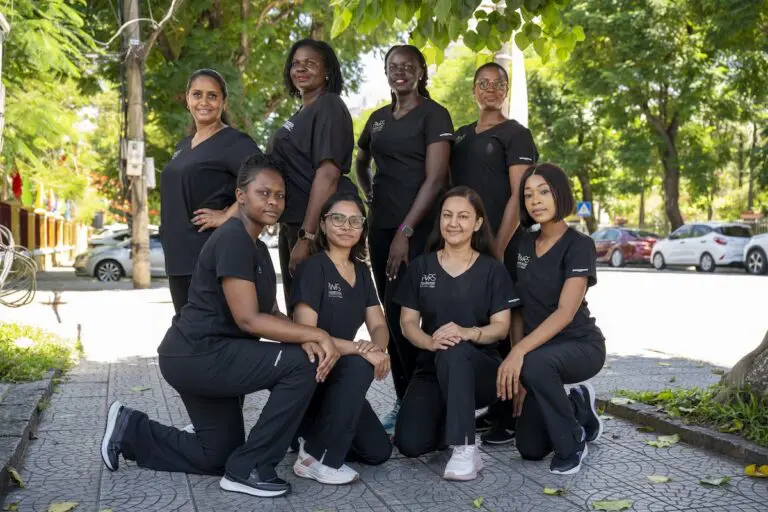
A ReSurge Surgical Team Training Trip of expert volunteer surgeons, anesthesiologists, nurses, and rehabilitation specialists was on the ground, and Augustine’s case became a powerful teaching moment for the entire local care team. As Dr. Chang puts it: “In surgery, we need to train by operating together, and we’re able to make that linkage through ReSurge.” Working side by side with the local surgical team at Kiruddu, the visiting specialists transferred skills and knowledge that will serve Ugandan patients long after they return home.
As Dr. James Chang, Chief of Plastic and Reconstructive Surgery at Stanford University and ReSurge’s Consulting Medical Officer, describes it: “In surgery, we need to train by operating together, and we’re able to make that linkage through ReSurge.”
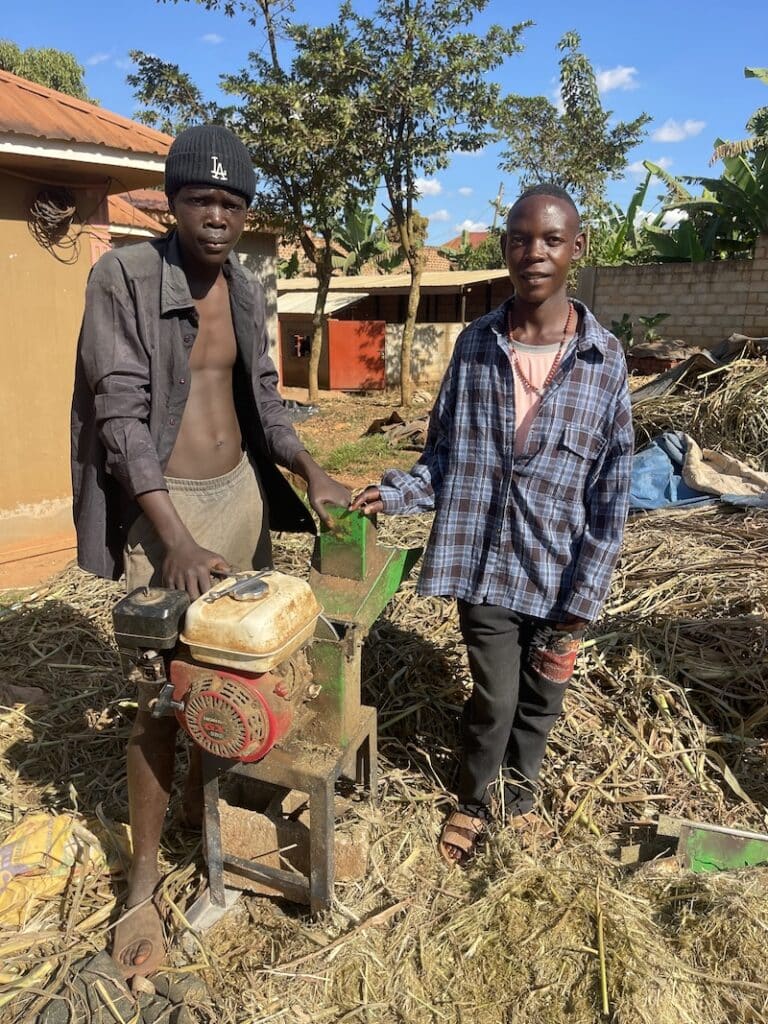
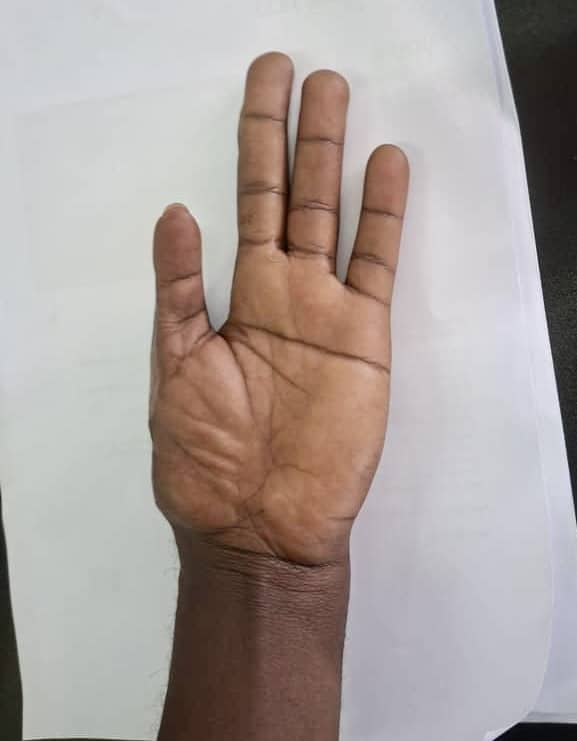
The surgery was a success.
“I thank ReSurge International for sending the team of medical experts who worked on me.” — Augustine Tumwesigye
Recovery, Rehabilitation, and Return
Today, Augustine is back on his farm — working, gripping, thriving. He continues to attend follow-up physiotherapy sessions at Kiruddu, part of the comprehensive, long-term care that ReSurge provides across East Africa.
His recovery is made possible in part by a transformational grant, which is fueling ReSurge’s East Africa expansion, scaling from approximately 300 cases per year to more than 2,000 cases annually across Uganda and Tanzania. Critically, this expansion includes not just surgery, but physiotherapy, ensuring patients like Augustine receive the full continuum of care they need to truly reclaim their lives.
As Dr. James Chang reminds us: “Other than the face, our hands are the most communicative part of our body when connecting to the outside world. They serve both form and function.” For Augustine, those words are no longer abstract. His hands work again — and so does everything that depends on them.